Build the Data Foundation for the Agent Era: Contribute to Easy Data x AI
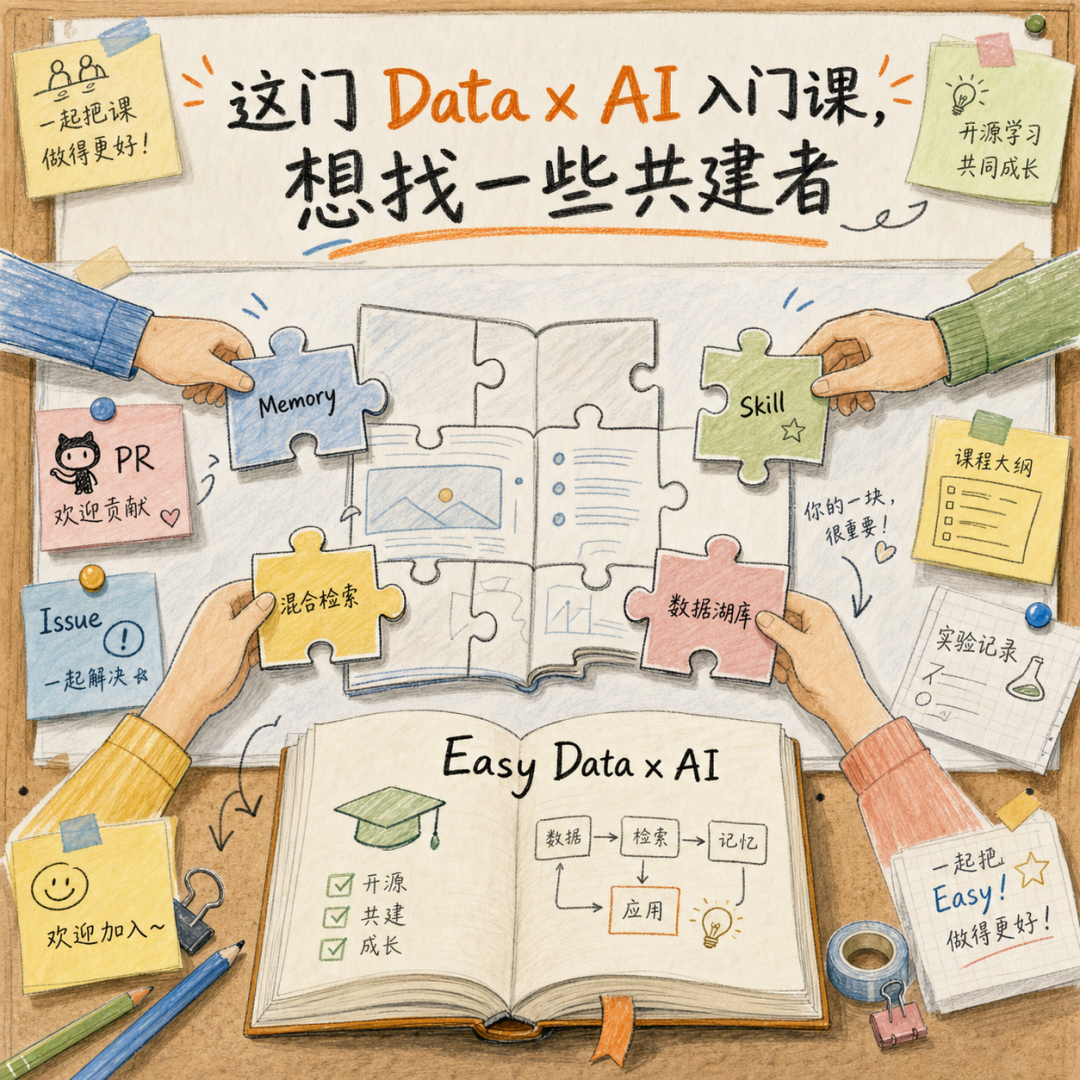
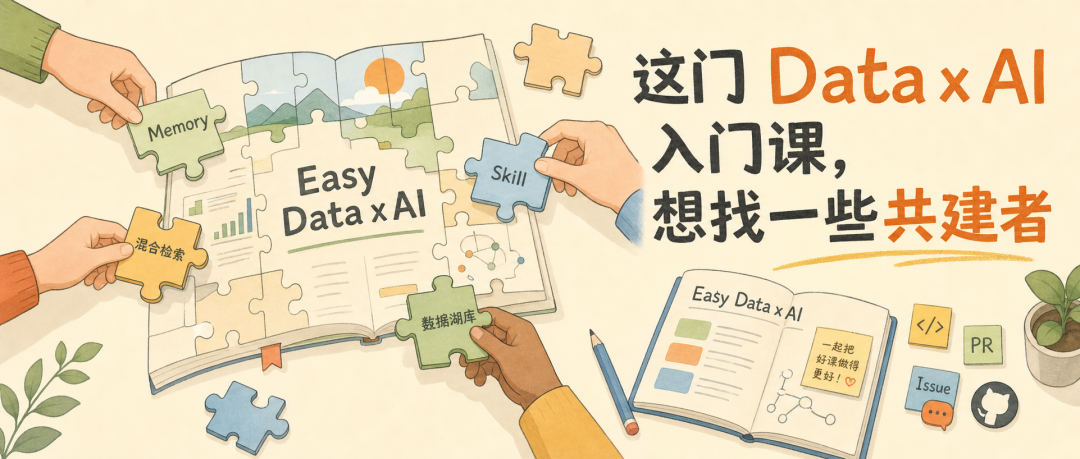
The OceanBase community and Datawhale are co-building Easy Data x AI, an introductory open-source course for the AI-agent era. It covers the path from large language models (LLMs) and AI agents to data foundations and practical applications.
The course is being built in public with the community. What it needs most is not another abstract definition, but practical experience: a deployment that worked, a failure that revealed a useful lesson, or a small example that makes a difficult concept easier to understand.
What the Easy Data x AI course aims to solve
Many developers can call an LLM API, but fewer have a framework for diagnosing why an AI application becomes unreliable as its data, context, permissions, and operational complexity grow. Easy Data x AI aims to establish that missing foundation:
- how models, data, and applications work together;
- why data foundations affect AI-agent quality;
- how to move from a demo to a dependable workflow;
- how practitioners reason about retrieval, memory, evaluation, and cost.
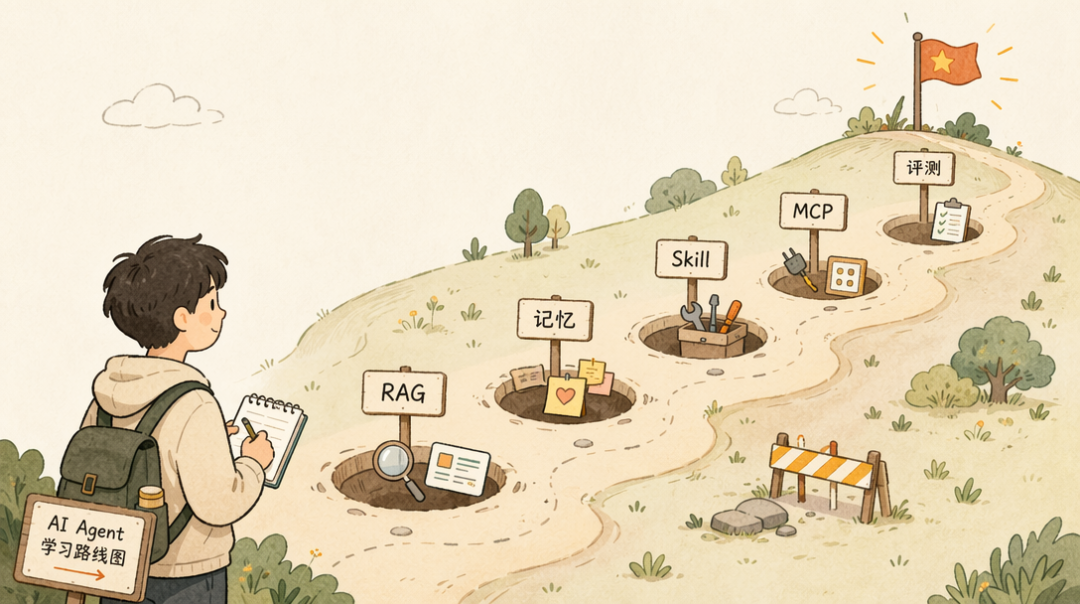
The curriculum follows two complementary paths:
| Path | Chinese name | Audience | Focus |
|---|---|---|---|
| Dao | 道篇 | Product managers, operators, beginners | Scene judgment, RAG design, memory experience, value evaluation |
| Shu | 术篇 | Developers with some coding experience | Streaming, tool use, AI-native data layers, Agentic RAG, skills, MCP |
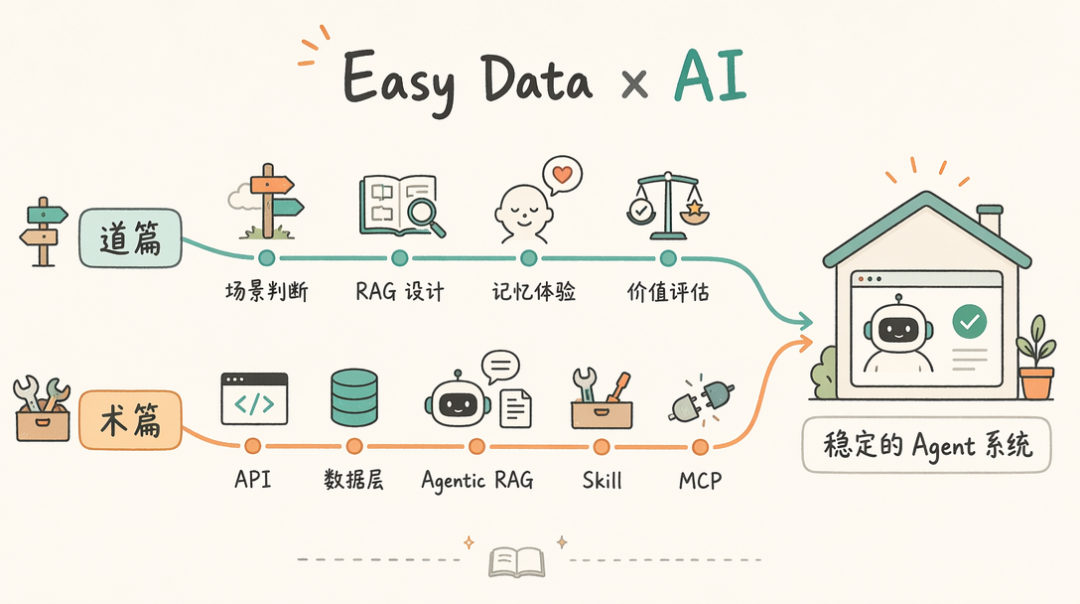
Dao develops product judgment: when an AI agent is the right tool, how to design retrieval-augmented generation (RAG) beyond “put everything in a vector database,” and what useful memory should mean for users. Shu develops hands-on skills: integrating APIs, choosing retrieval strategies, and building runnable AI-agent workflows.
Both paths address the same practical capabilities: keyword retrieval, vector retrieval, reranking, memory, and evaluation. The right combination depends on the use case, risk profile, and operating constraints; no stack is automatically production-ready.

Why community co-building matters
A course written by one team can be coherent, but a course informed by many practitioners’ experiences can be more useful. Contributors can add a case study, improve an explanation, supply code, review a lesson, or identify where a beginner is likely to get lost.
The goal is not to turn every contribution into a polished academic chapter. A clear paragraph, a diagram, a benchmark, or a well-scoped failure analysis can improve the course.

Who should join and what you can contribute
The invitation is open to engineers, database practitioners, AI application developers, product managers, students, and curious builders. You do not need expertise in every part of the stack. A small, concrete contribution is valuable.
Useful contributions include:
- a deployment story that records what worked and what did not;
- a short code sample or notebook that clarifies one concept;
- a diagram that clarifies architecture or data flow;
- a review comment that catches confusion early;
- a benchmark, checklist, or failure analysis from real work.
Merged contributions may receive recognition on the contributor wall and community gifts, subject to the course’s contribution policies. Contributors also gain the opportunity to work with a community that is learning how data and AI fit together.
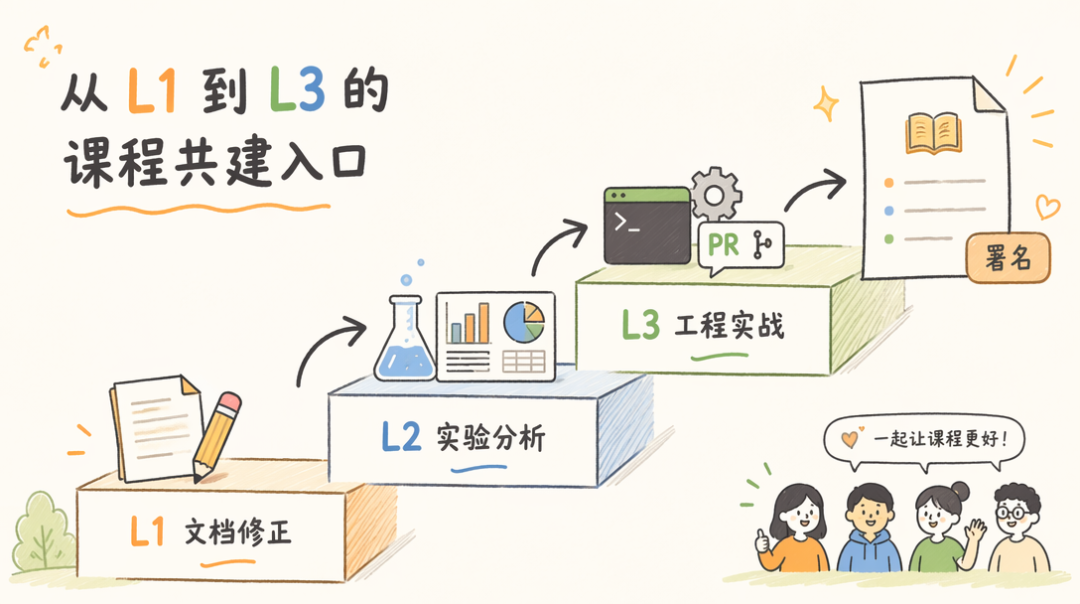
Contribution levels from L1 to L3
Contribution tasks are tagged by difficulty in the course CONTRIBUTING guide:
| Level | Focus | Examples |
|---|---|---|
| L1 | Document fixes | clarify wording, fix examples, improve diagrams, add chapter intros |
| L2 | Experiment analysis | compare approaches, document results, explain trade-offs (e.g., embedding model choice, hybrid-search latency) |
| L3 | Engineering practice | runnable demos, production patterns, end-to-end walkthroughs (e.g., multi-Agent memory conflicts, hybrid-search labs) |
How to get involved
If you have a real story to share, start small:
- Pick one topic you can explain from experience—RAG, memory, evaluation, deployment, or data modeling.
- Browse open issues in the Easy Data x AI repository and claim a task that matches your level.
- Write a short section or submit a fix. A paragraph, diagram, or code snippet is enough.
- Open a pull request so others can review and build on it.
The course is intended to grow in public. Your example may be the missing piece another learner needs.
Looking for a more advanced follow-on?
For a more advanced, engineering-oriented next step, see Deep Agents in Action, an open course from the same maintainers that covers LangChain and LangGraph. Where Easy Data x AI builds data-and-AI judgment, Deep Agents in Action explores virtual file systems, sub-agents, planning, skills, and long-term memory for AI-agent systems.

If you are building reliable AI-agent infrastructure, bring your experience to Easy Data x AI. One useful example can make the course clearer for everyone.