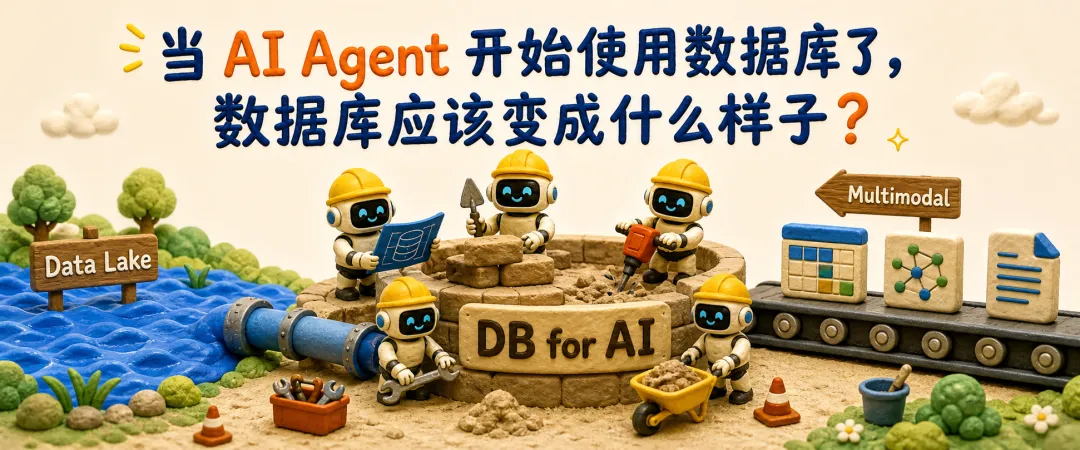
What Should a Database Become When AI Agents Start Using It?
When AI agents use databases, the database is no longer only where an application stores rows. Depending on the workload, the surrounding data platform may also need to support context, memory, retrieval, safe experimentation, rollback, and a path from a local prototype to enterprise-scale operations.
That is the question behind OceanBase’s discussion of Lakebase and its AI product family: what should DB for AI look like when AI agents are first-class users?
Three vendors, three interpretations of Lakebase
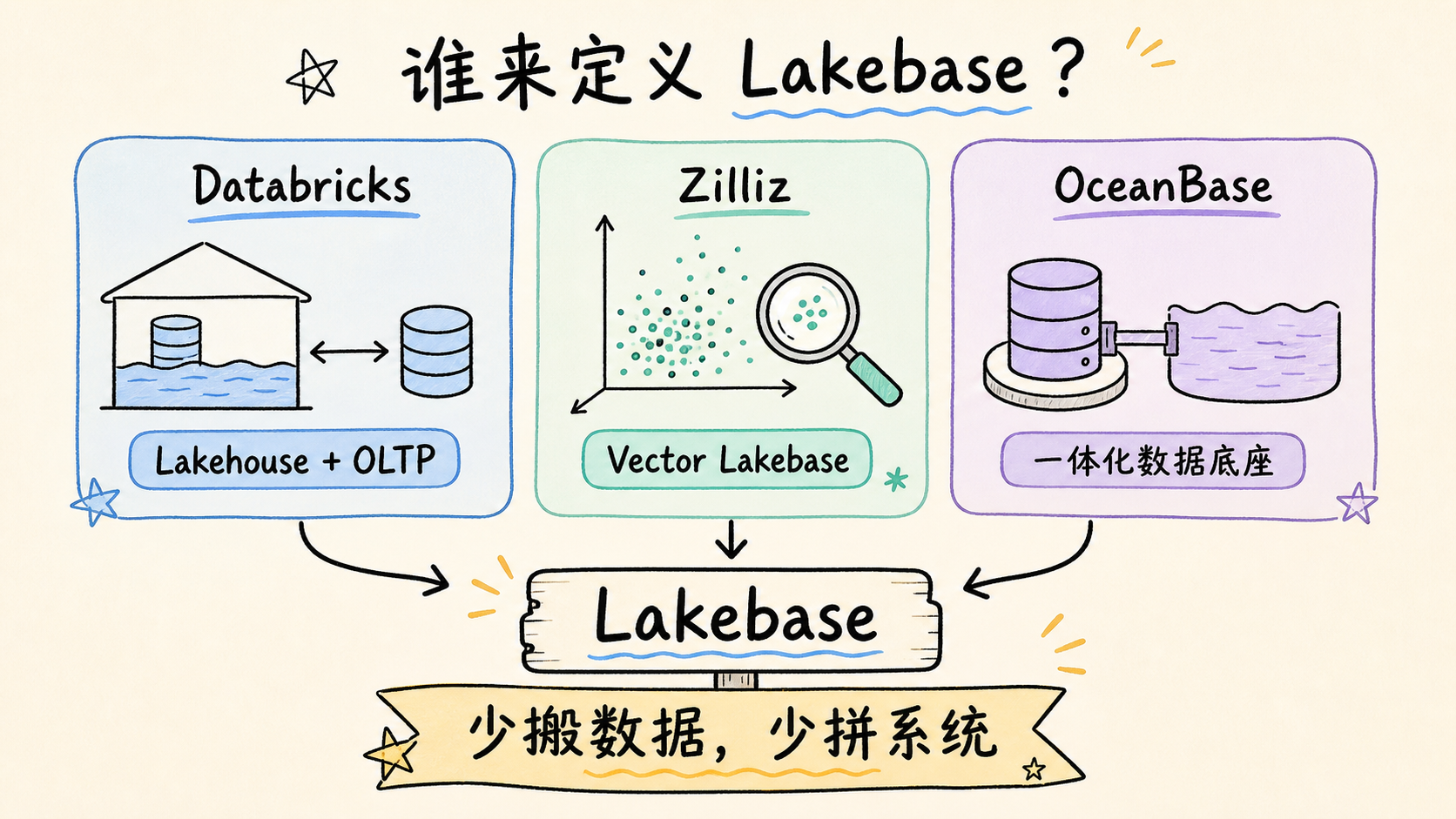
“Lakebase” is not a universally standardized term. Different vendors use it to describe different combinations of data lake, warehouse, operational database, and vector-search capabilities:
| Vendor | Lakebase interpretation |
|---|---|
| Databricks | A serverless Postgres offering positioned to connect Lakehouse analytics and operational workloads for AI applications |
| Zilliz | A vector-database and data-lake-storage approach focused on AI search |
| OceanBase | A lake-and-database architecture positioned around transactions, real-time services, object storage, and multimodal data governance |
OceanBase presents Lakebase as the next step in its integration strategy. Rather than treating it as a single engine label, the company describes a platform intended to connect OLTP, analytics, hybrid search, and AI workloads through common data-management capabilities.
OceanBase Lakebase: a lake-and-database stack
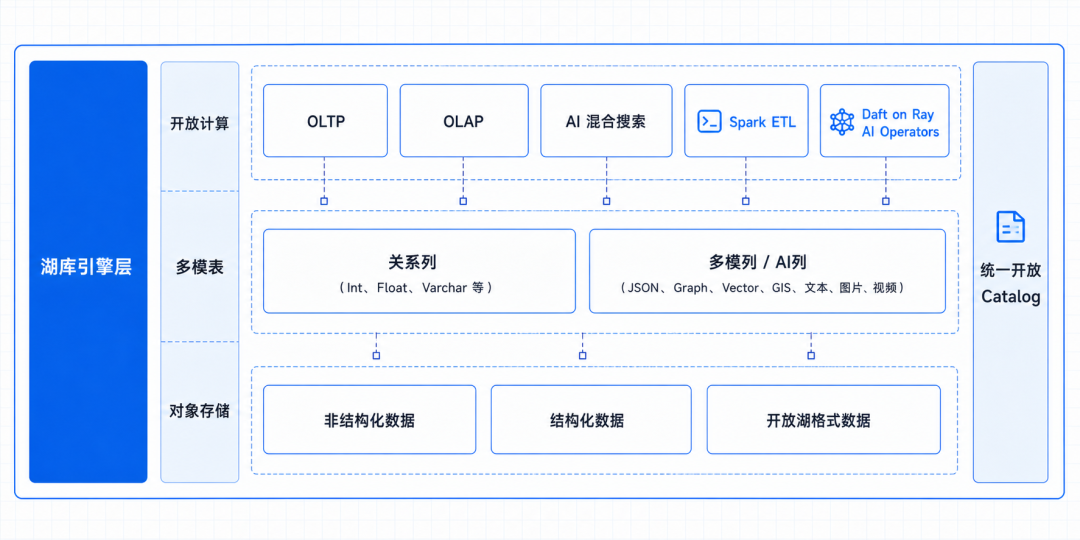
OceanBase describes Lakebase as combining its database engine with object storage and open-compute integrations such as Spark and Ray:
1 | OceanBase Lakebase |
The intended outcome is to reduce data movement between separate systems while supporting OLTP, analytics, hybrid search, and AI workloads. The exact architecture, deployment model, and available integrations should be confirmed against the applicable OceanBase release documentation.
Lakebase, seekdb, and PowerMem: who does what
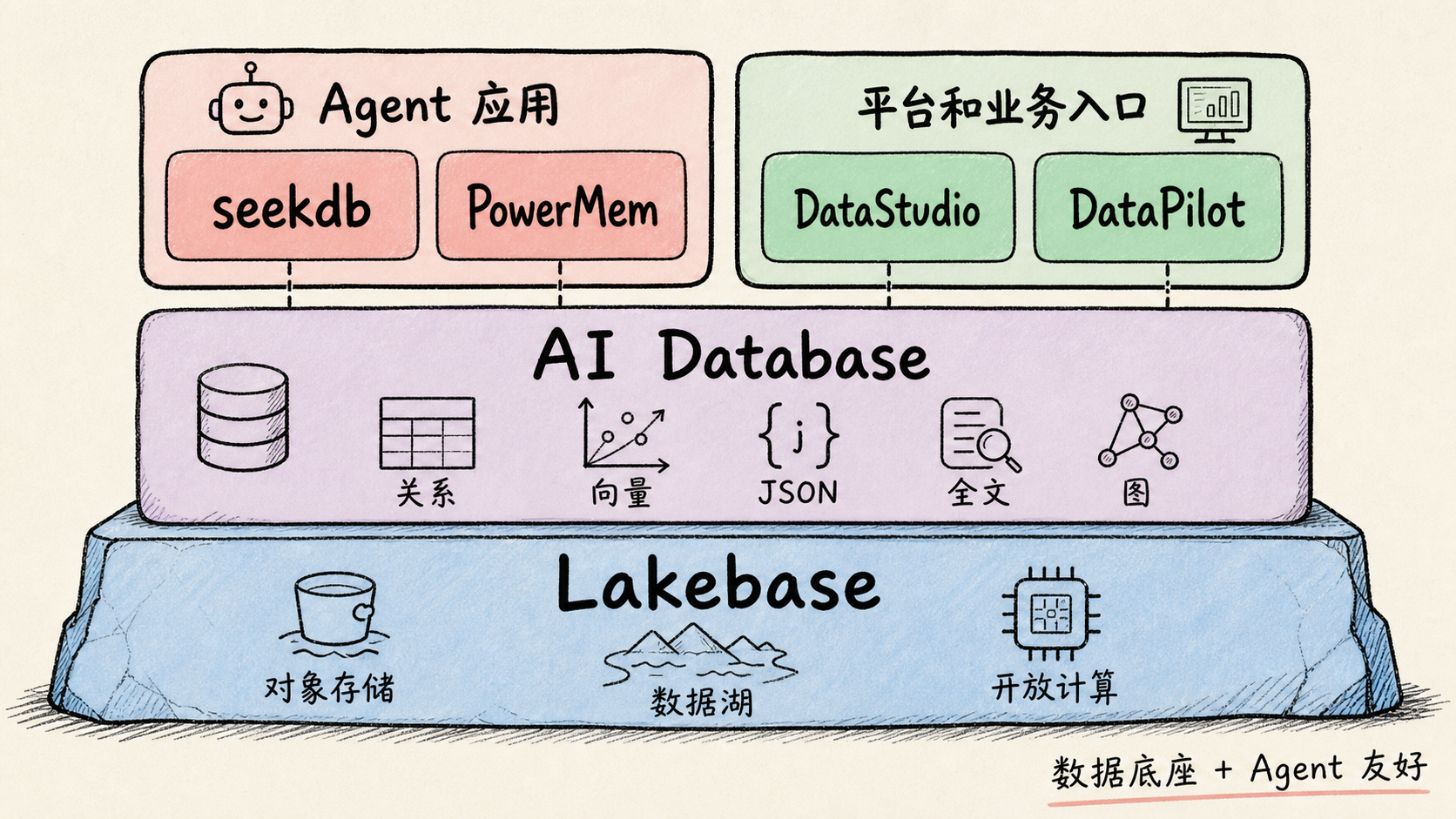
AI-agent applications often need more than a SQL endpoint. OceanBase positions three components around distinct roles:
| Component | Role for Agents | What it provides |
|---|---|---|
| OceanBase Lakebase | Enterprise data foundation | Multimodal data management, governance, and open-compute integration |
| seekdb | Developer-facing AI database | Write, Search, Fork—hybrid search, local or server deployment, and data branching |
| PowerMem | Memory-management layer | Extract, merge, forget, and recall information that AI agents may retain across sessions |
In short:
- Lakebase is positioned as the governed data layer at scale.
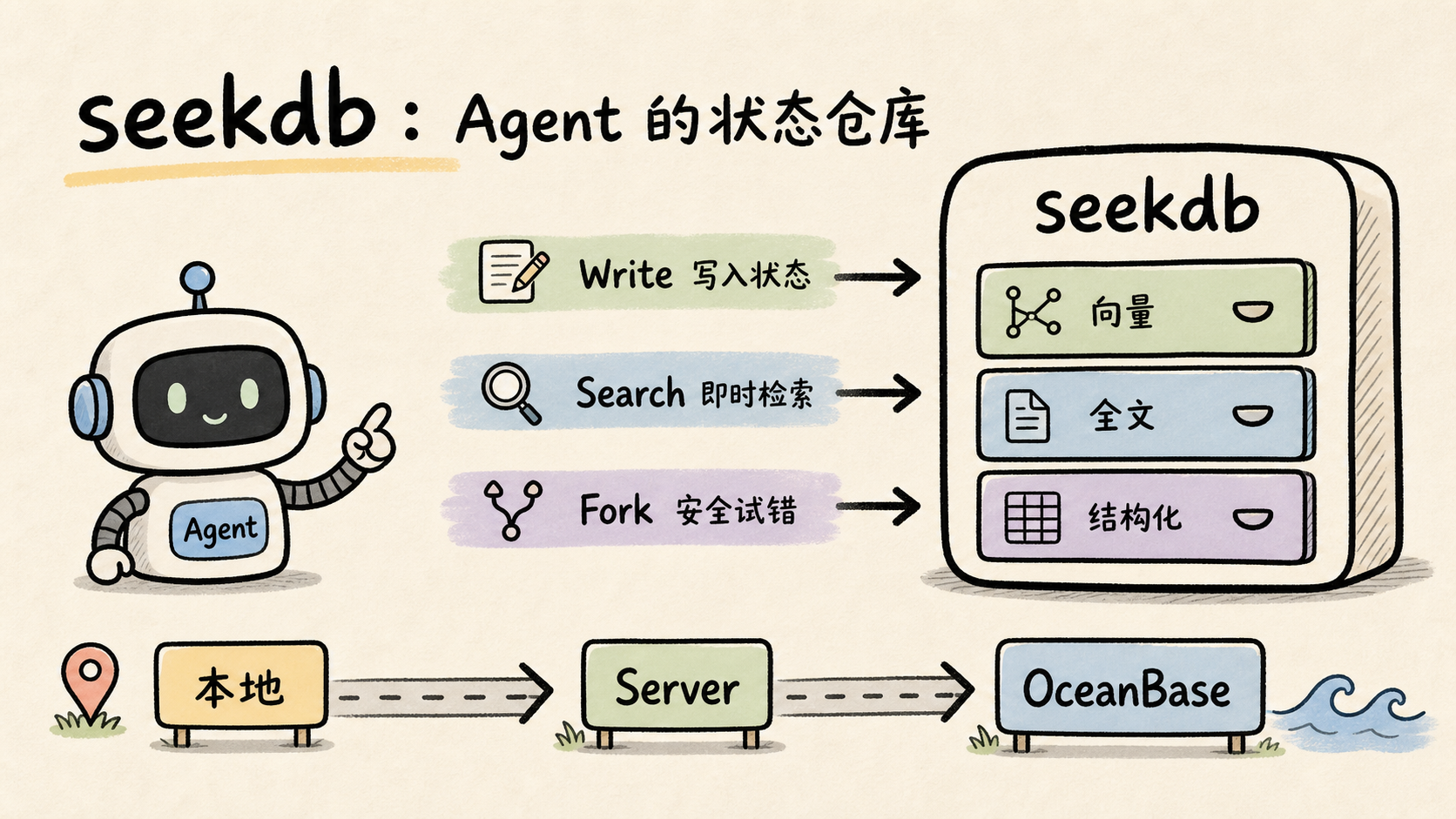
- seekdb is designed for AI agents to write state, search data, and create isolated branches.
- PowerMem is intended to help AI agents retain useful information while allowing lower-value context to decay.
seekdb: Write, Search, and Fork
seekdb is an open-source, developer-facing entry point at https://github.com/oceanbase/seekdb. Its tagline describes its intended agent workload: Write, Search, Fork. The State Store for AI Agents.
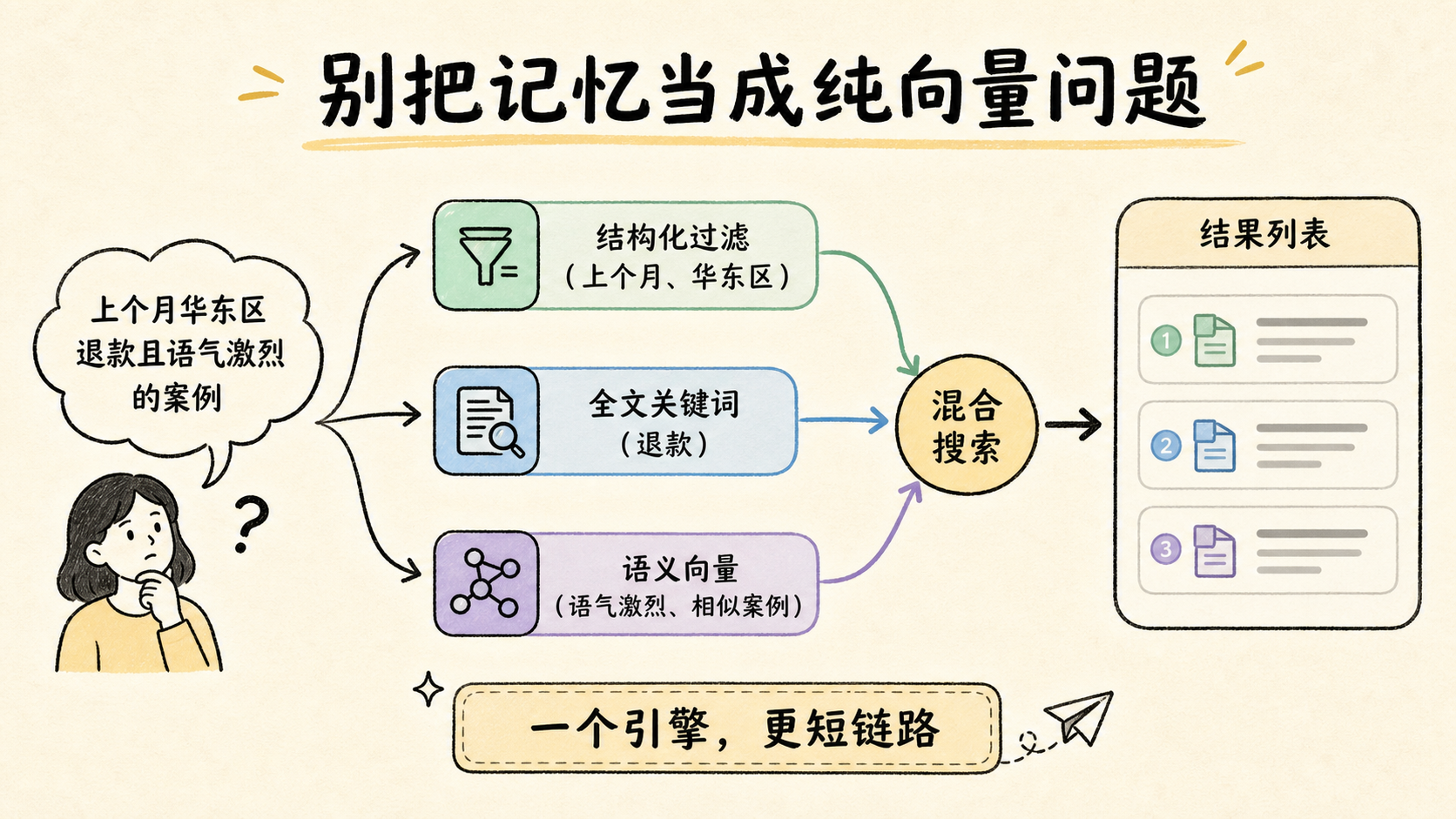
An agent asking for “angry refund-related complaints from East China last month” needs structured filters, full-text keywords, and semantic similarity at once. seekdb is designed to combine these retrieval modes in one engine.
Developers can start with the Python SDK:
1 | pip install -U pyseekdb |
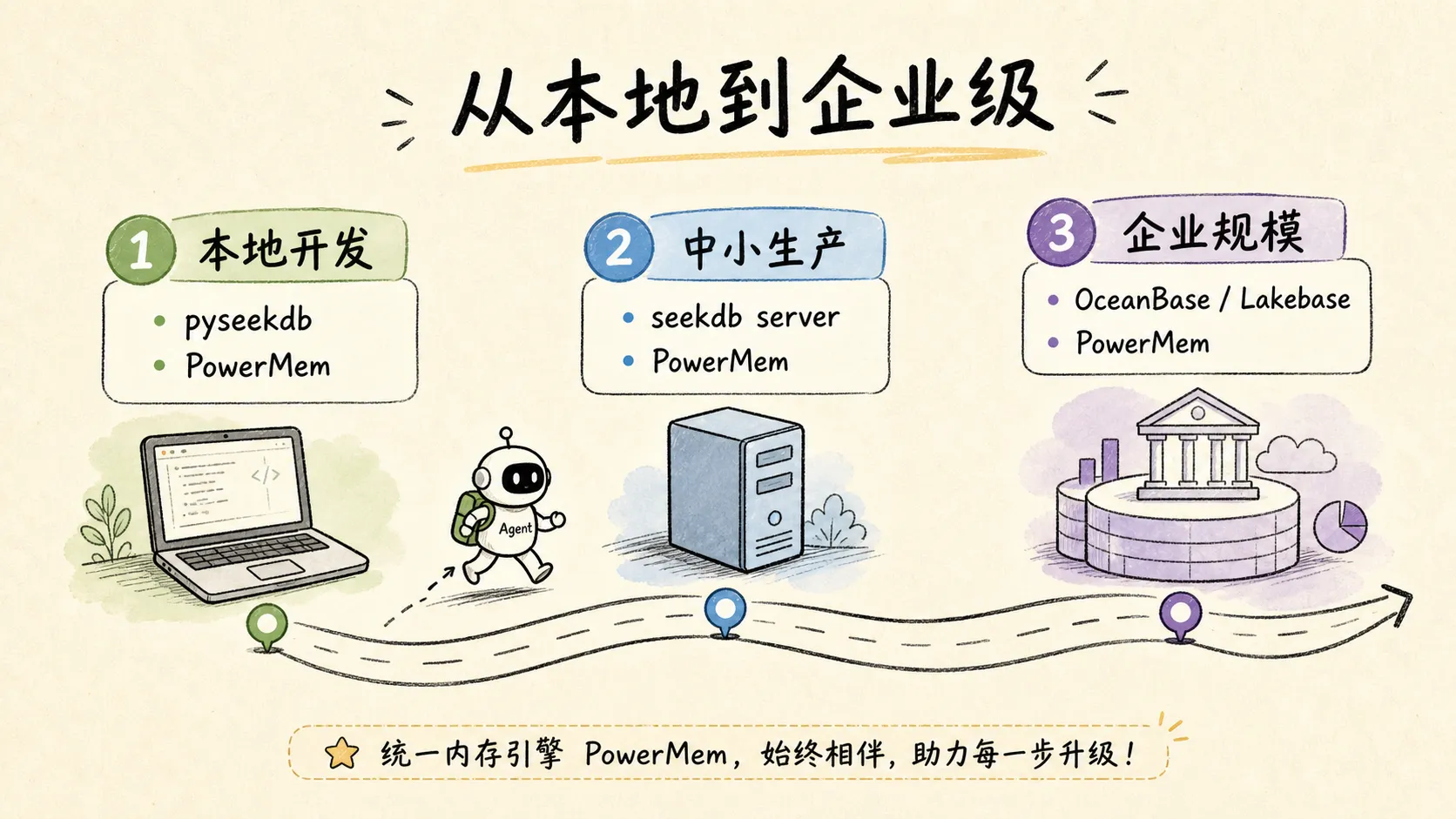
1 | local pyseekdb + PowerMem → seekdb server → OceanBase / Lakebase |
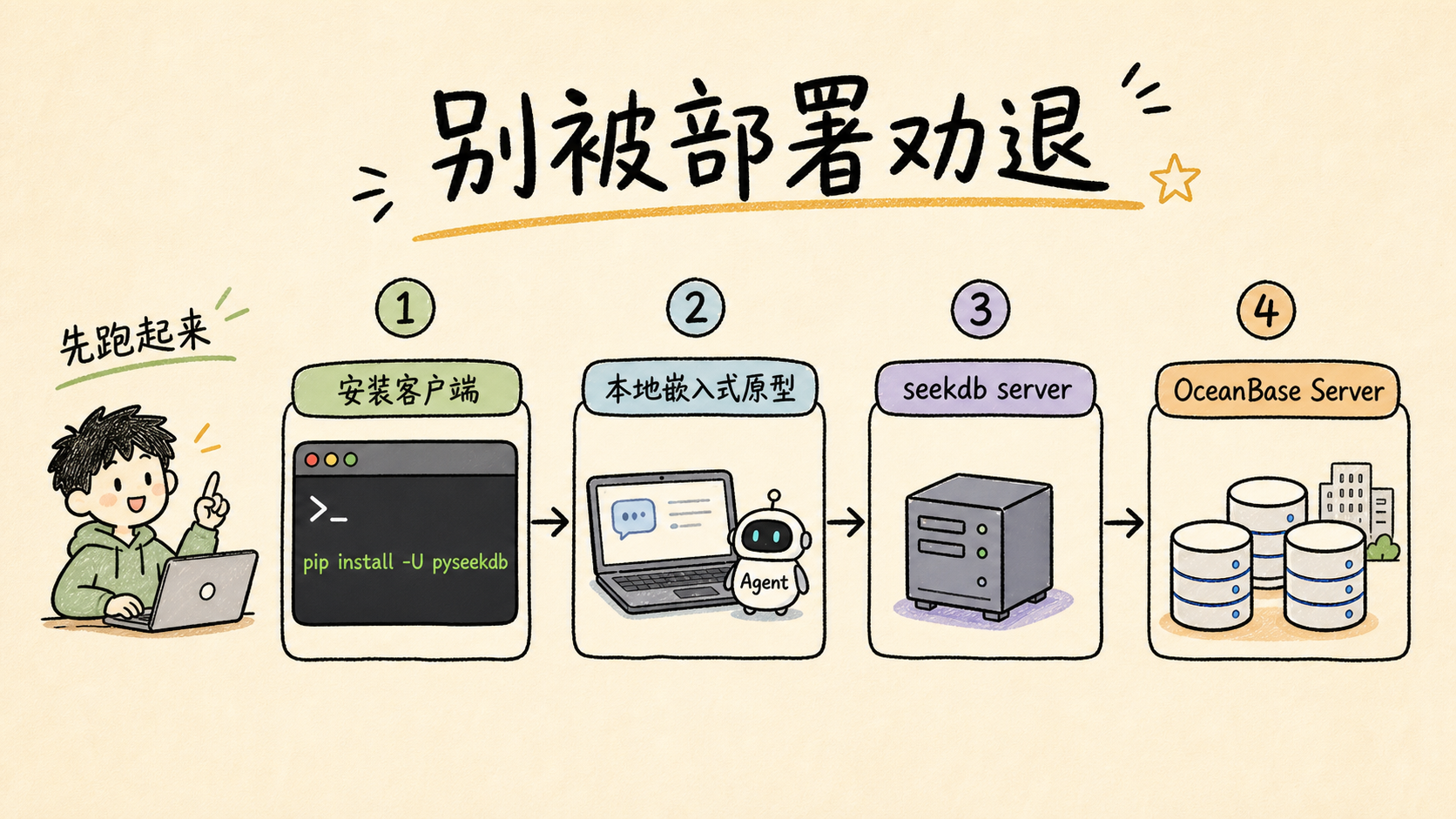
According to the project documentation, pyseekdb supports embedded, local-server, and remote OceanBase modes. This can support a progression from a laptop prototype to a server deployment; the migration path and compatibility requirements should be validated for each application.
Hybrid search can shorten the retrieval chain by combining structured filters, keyword search, and semantic vectors in one engine instead of coordinating three separate systems.
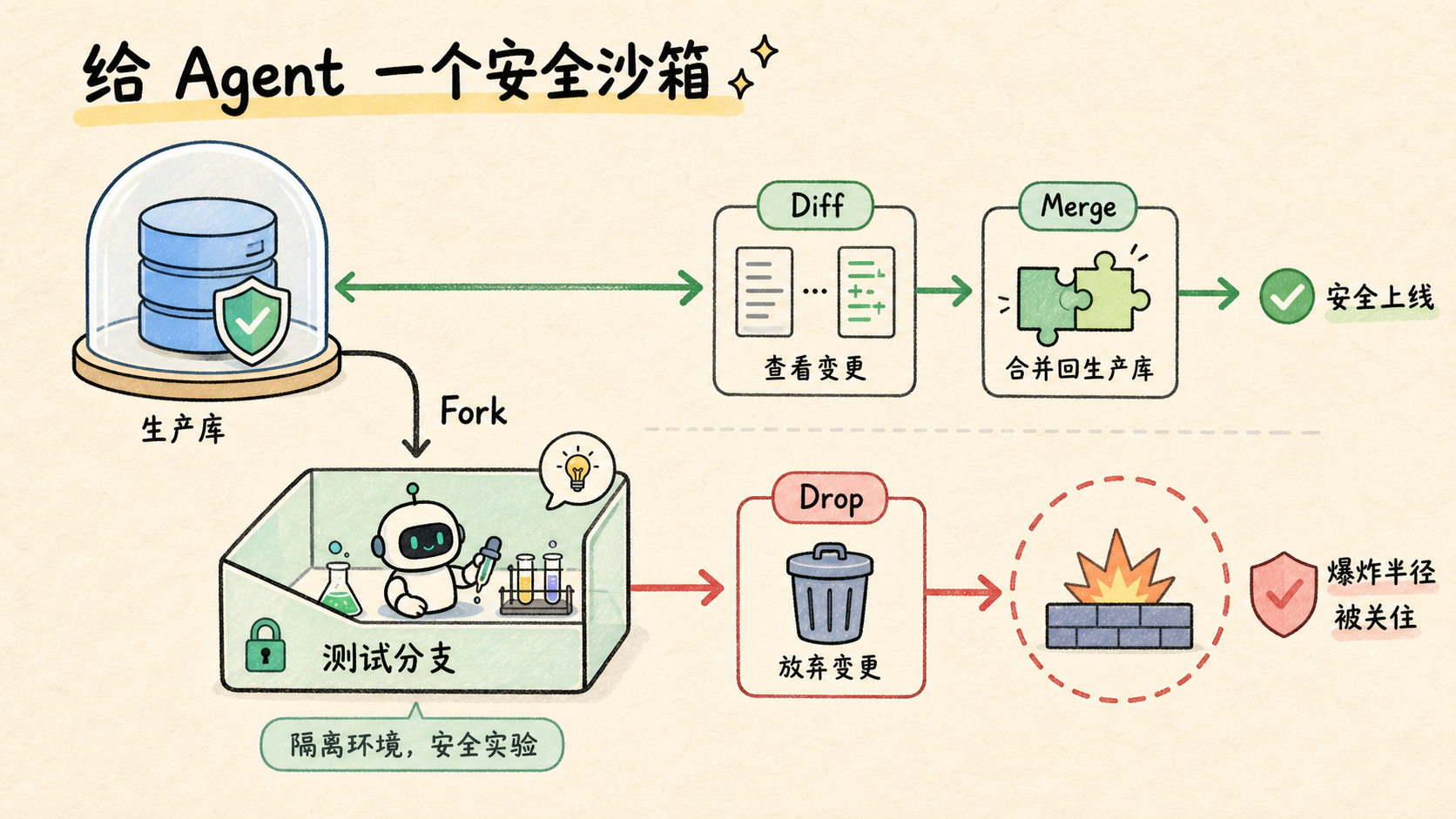
seekdb also provides Fork Table and Fork Database. These data branches are analogous to Git branches for agent workloads: an agent can modify data, test a prompt, or run an evaluation in isolation, then merge a successful result or drop a failed branch. Teams should still apply least-privilege access controls and review policies; branching does not replace operational safeguards.
PowerMem: remember, merge, and forget
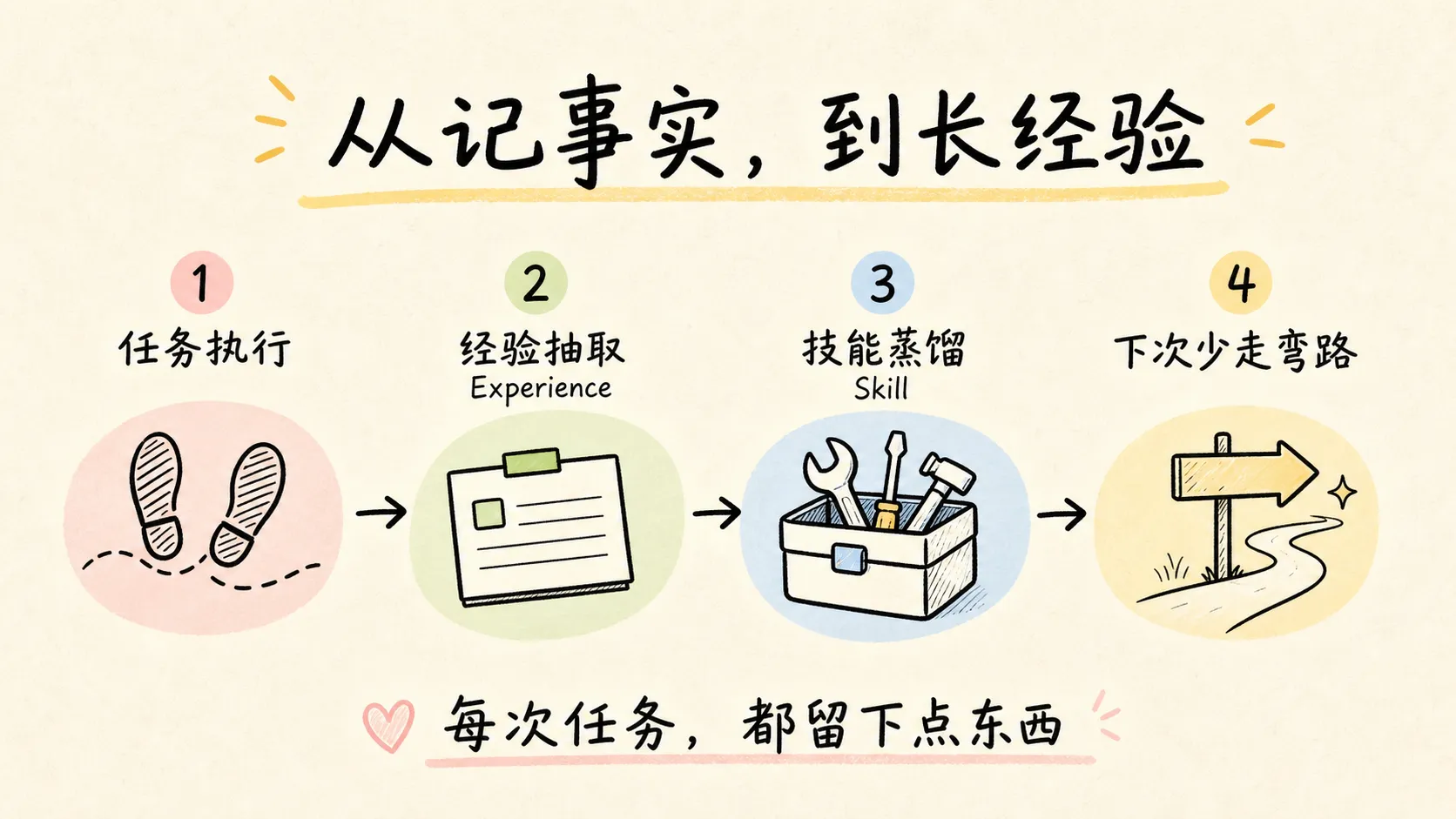
PowerMem complements seekdb by managing information an AI agent may retain. It is designed to extract important facts from dialogue and tasks, merge changing memories, age out stale information, and recall useful context when needed.
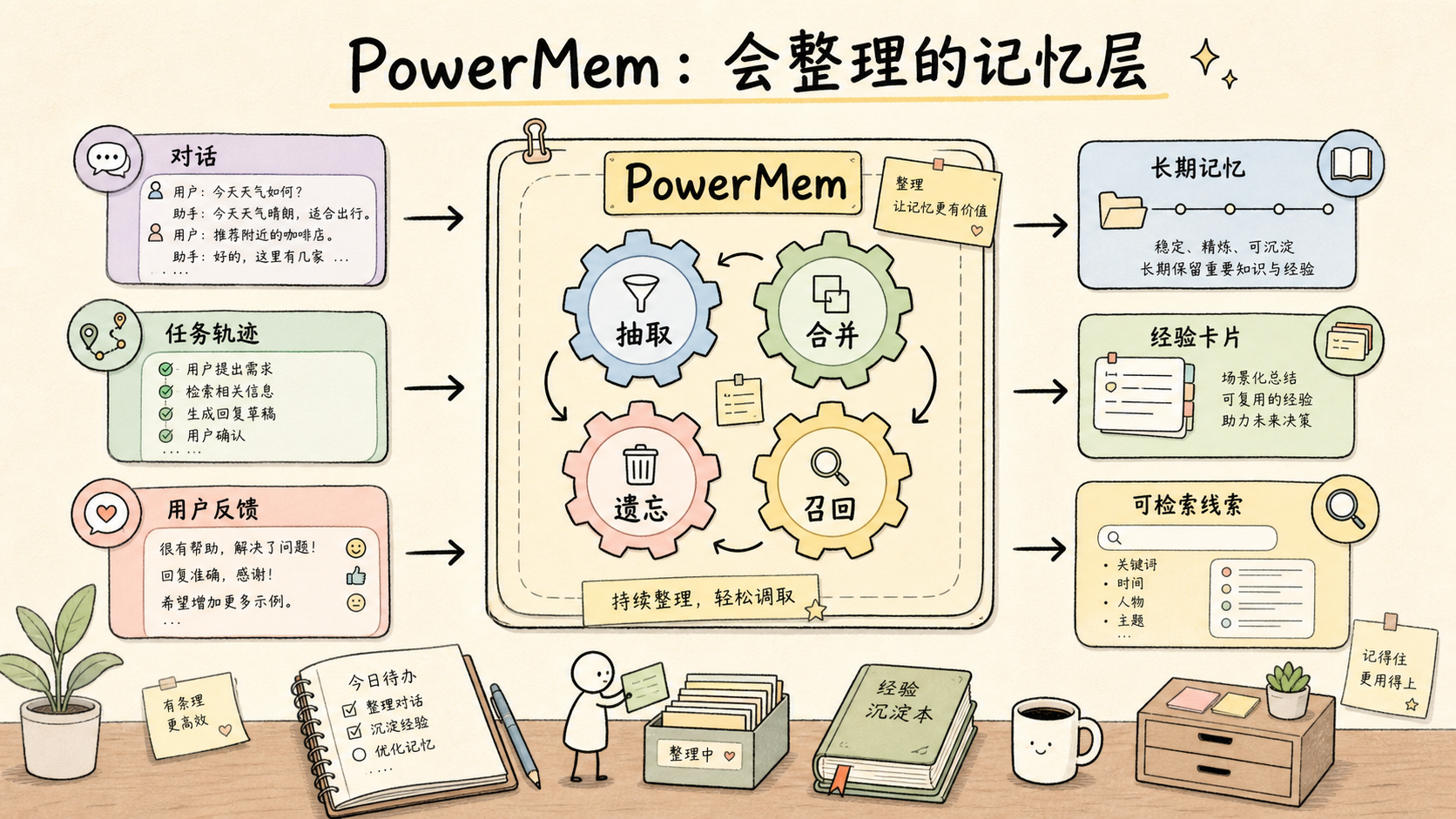
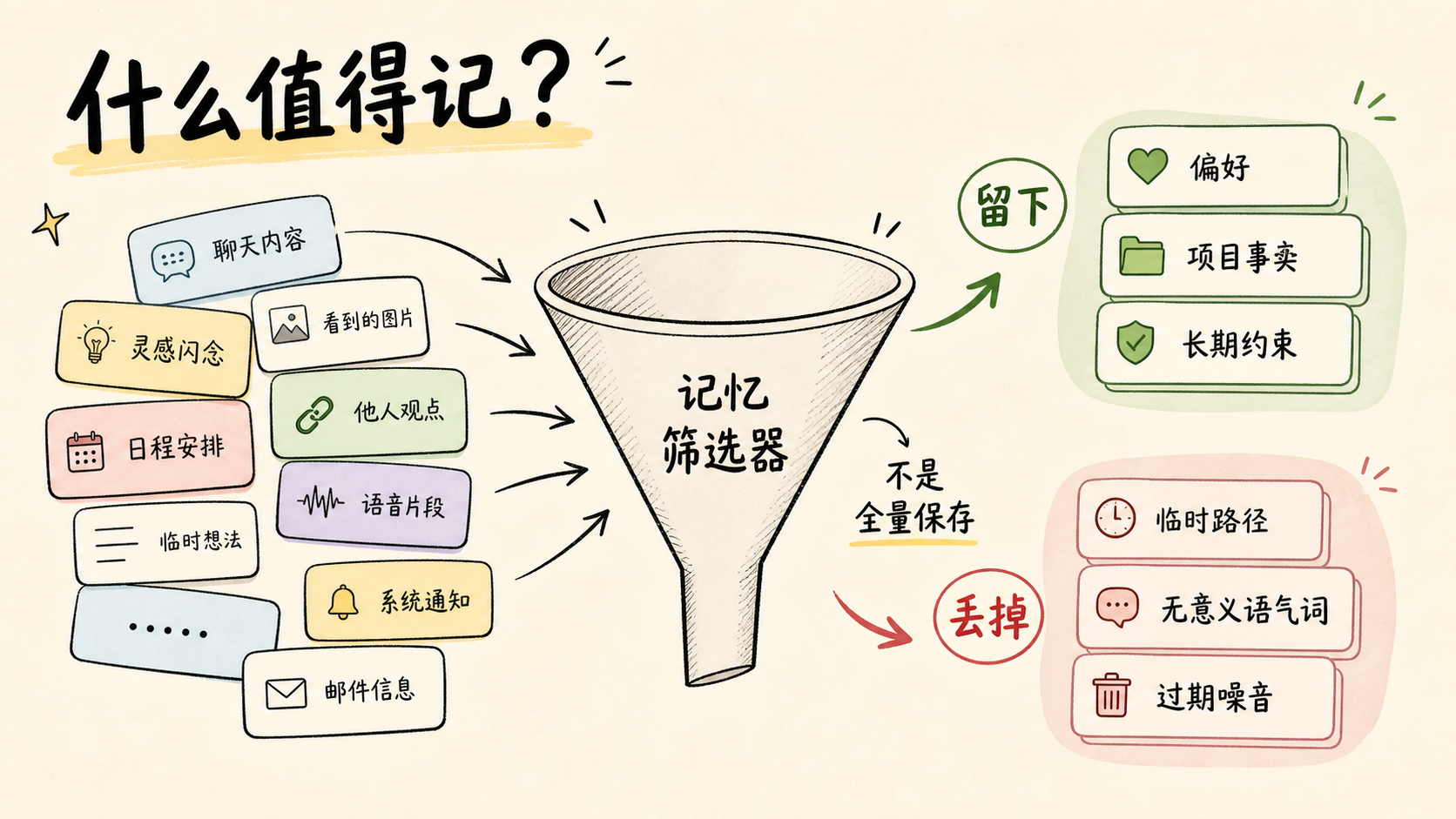
Not every interaction deserves permanent storage. PowerMem can organize chat content, task traces, and feedback into long-term memory, experience records, and searchable context while excluding temporary noise.
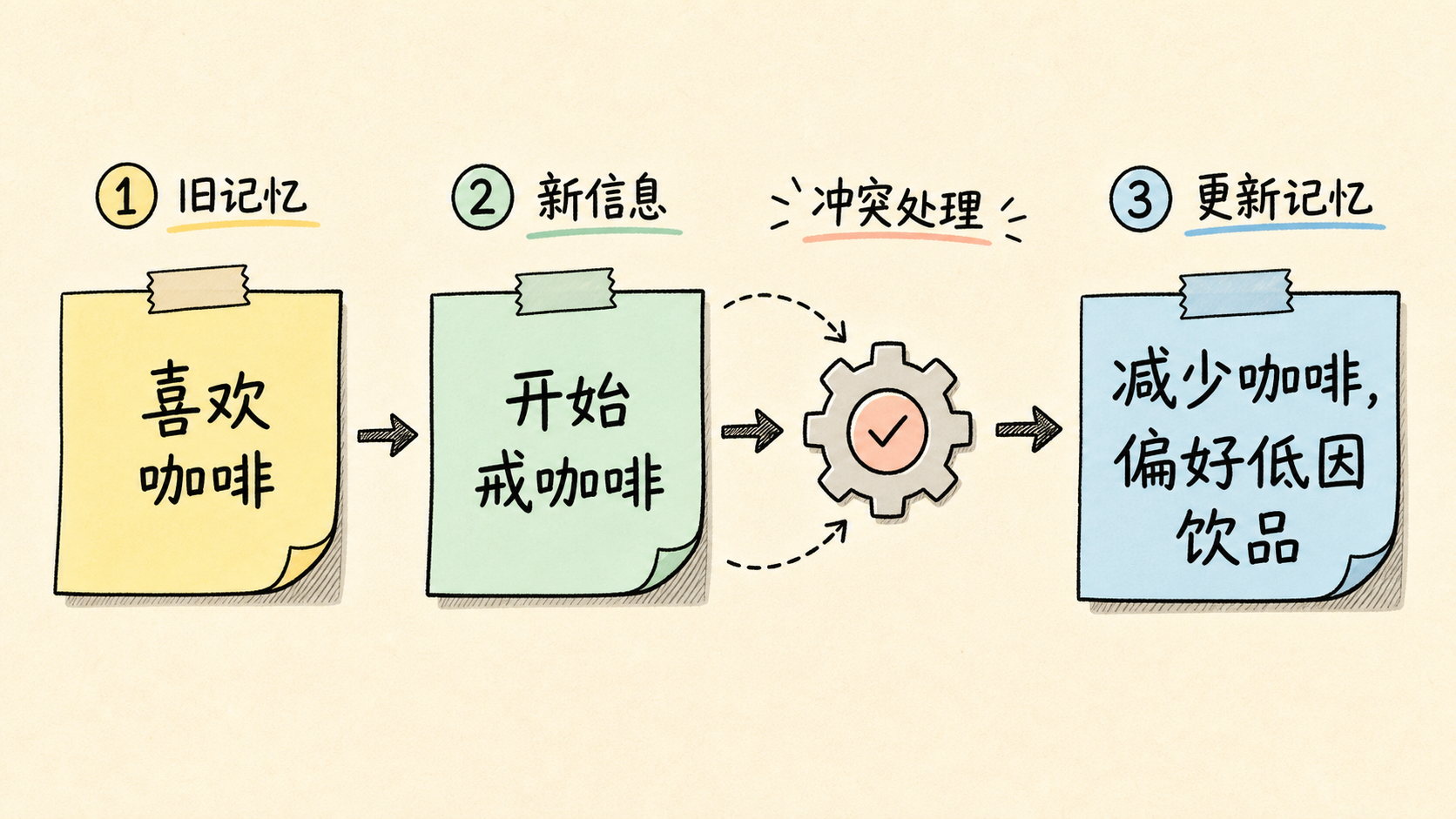
When new information conflicts with existing memory, the system aims to reconcile and update stored facts rather than blindly appending everything. Its effectiveness will depend on the configured models, policies, and data quality.
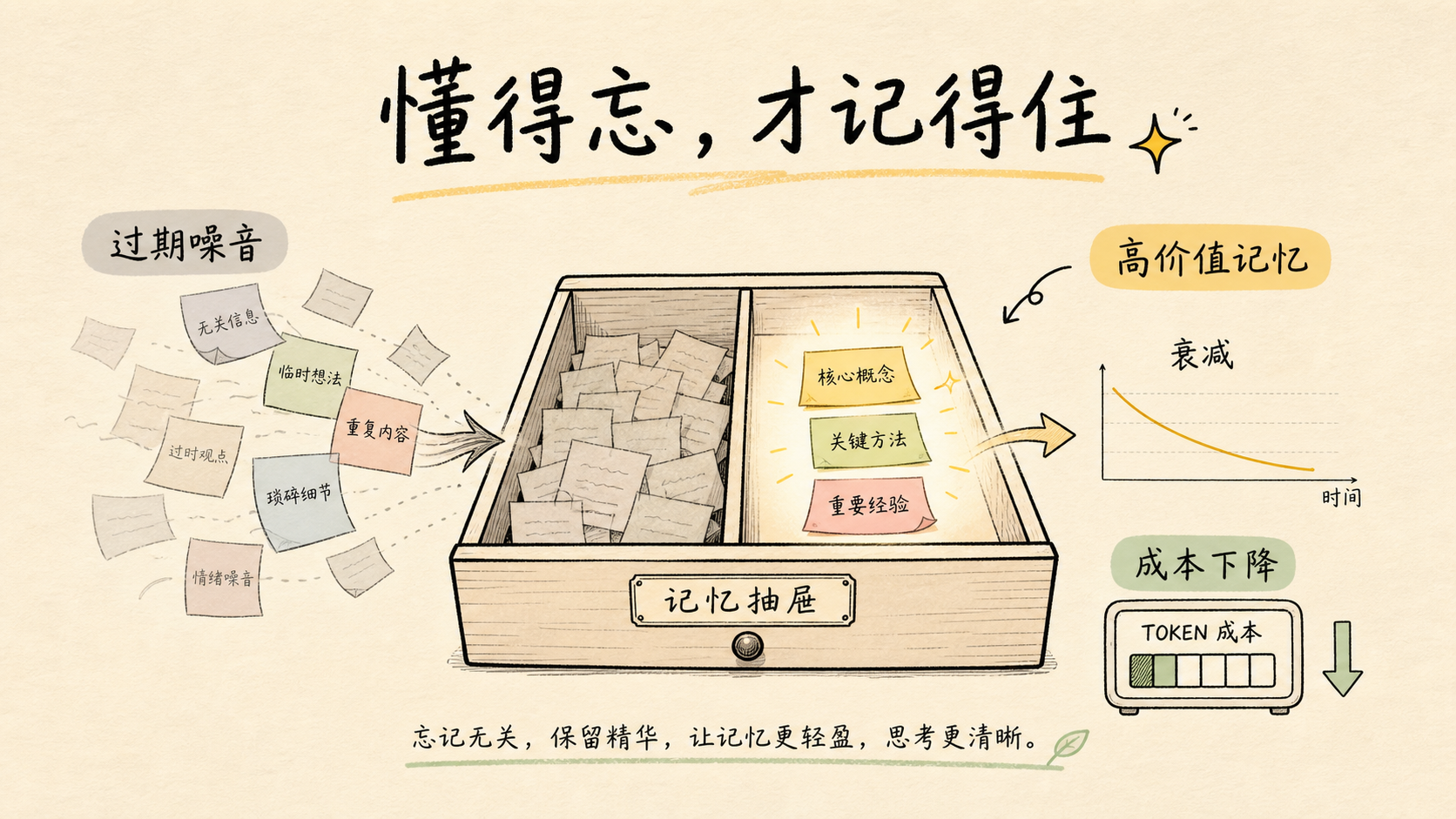
Over time, forgetting irrelevant details can reduce token use and keep recall focused on durable knowledge.
🧠 Building an Agent that needs durable, self-organizing memory? Explore PowerMem at https://github.com/oceanbase/powermem and see how extract-merge-forget-recall fits into your stack.
PowerMem is designed to support multiple backends and can be paired with seekdb. In that arrangement, PowerMem decides what is worth retaining, while seekdb stores and retrieves it through hybrid search.
seekdb M0 extends the same idea toward cloud memory. OceanBase describes it as a way for chat records and task traces to become reusable experience that can be shared across AI agents; availability and feature scope should be verified in current product documentation.
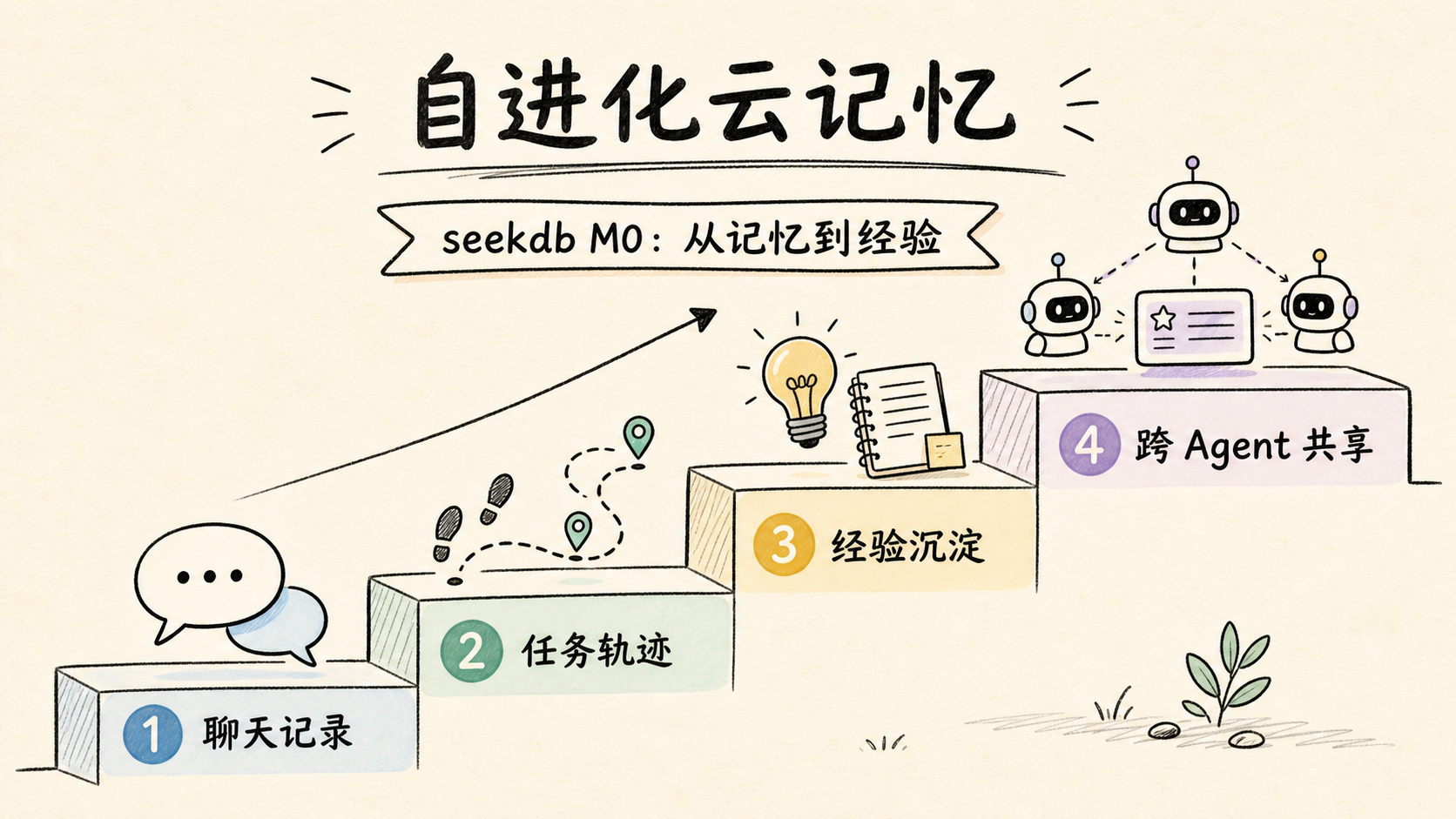
Key diagrams
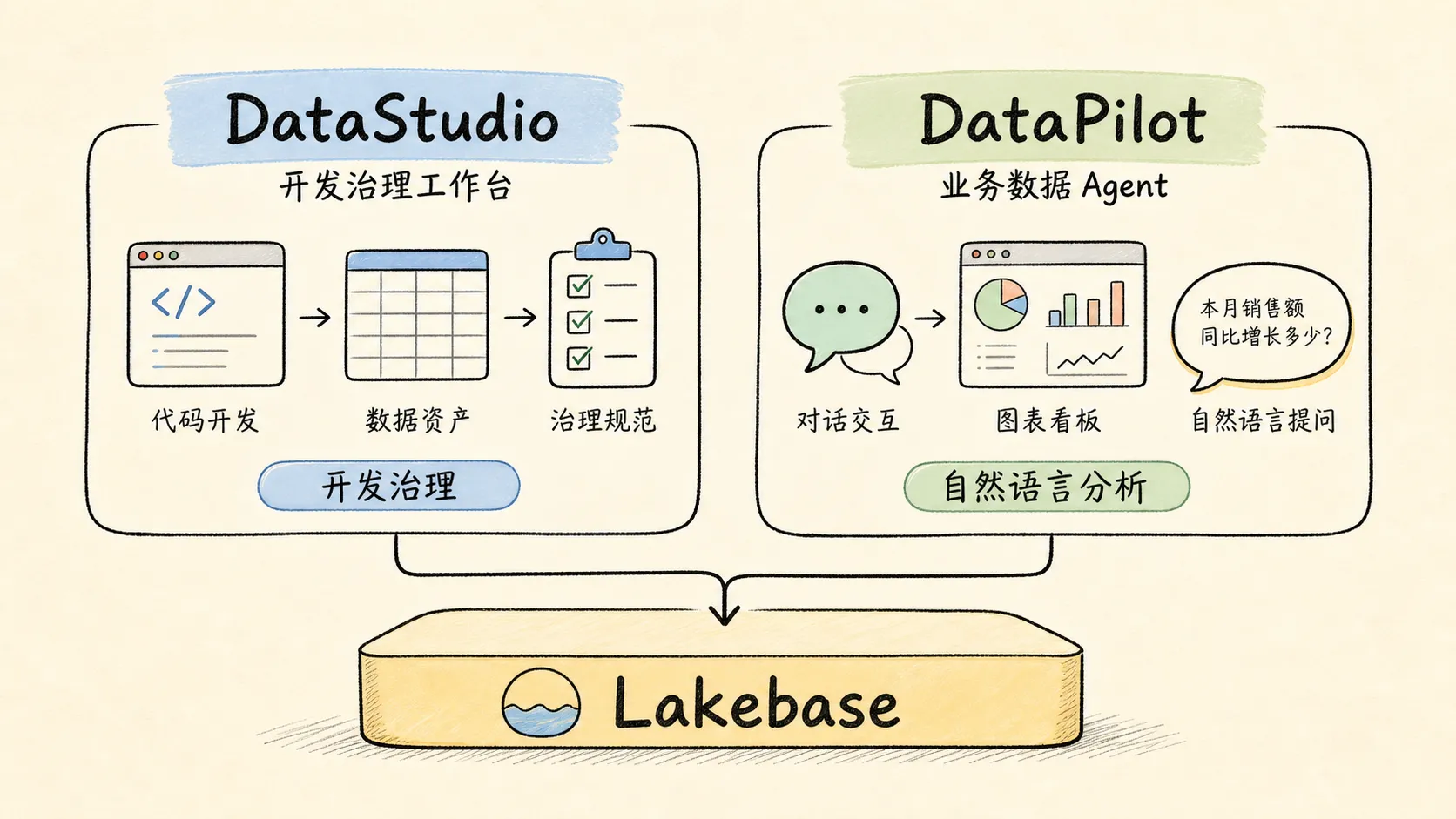
The remaining figures summarize how the pieces fit together at a glance.
From cloud to edge: local brains and central governance
Not every AI agent will run in the cloud. Devices, robots, and edge systems may need local, low-latency state, user preferences, task traces, and retrieval indexes. Embedded seekdb plus PowerMem can provide a local memory and retrieval layer, while OceanBase Lakebase is positioned for central governance, training, evaluation, and long-term data management.
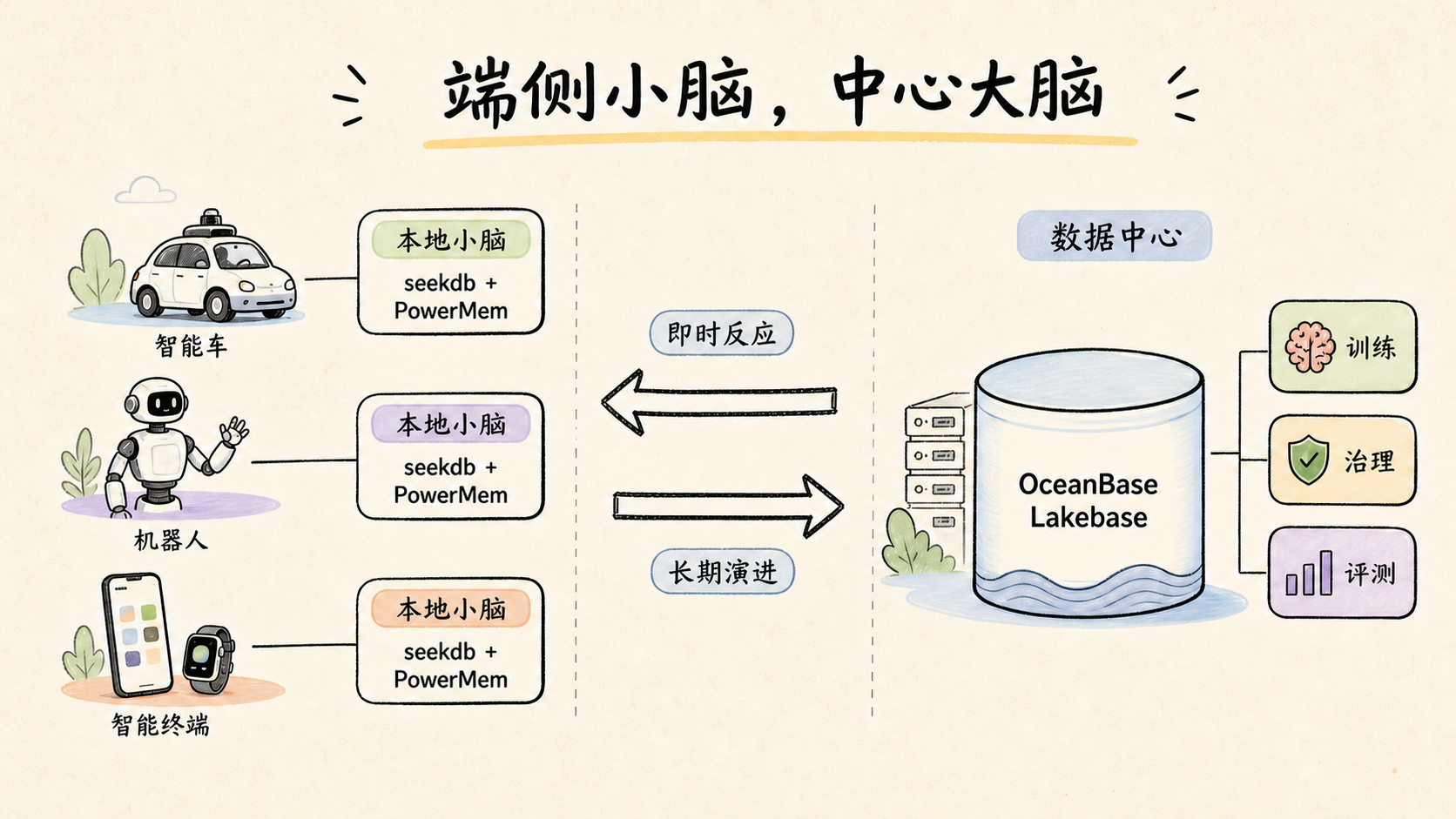
The pattern is straightforward:
- Edge devices can react with local state and retrieval.
- Central Lakebase can govern training data, evaluation, and long-term data management.
This split can let teams prototype on a laptop, validate a server deployment, and then evaluate a move to enterprise OceanBase. It does not eliminate the need for schema design, security review, or migration testing.
AI for DB versus DB for AI
This leads to a more useful definition of DB for AI:
- AI for DB helps operate a database—SQL assistance, inspection, reporting, and diagnostics.
- DB for AI adapts data systems for AI-agent workloads, with data access, memory, security, and traceability as core concerns.
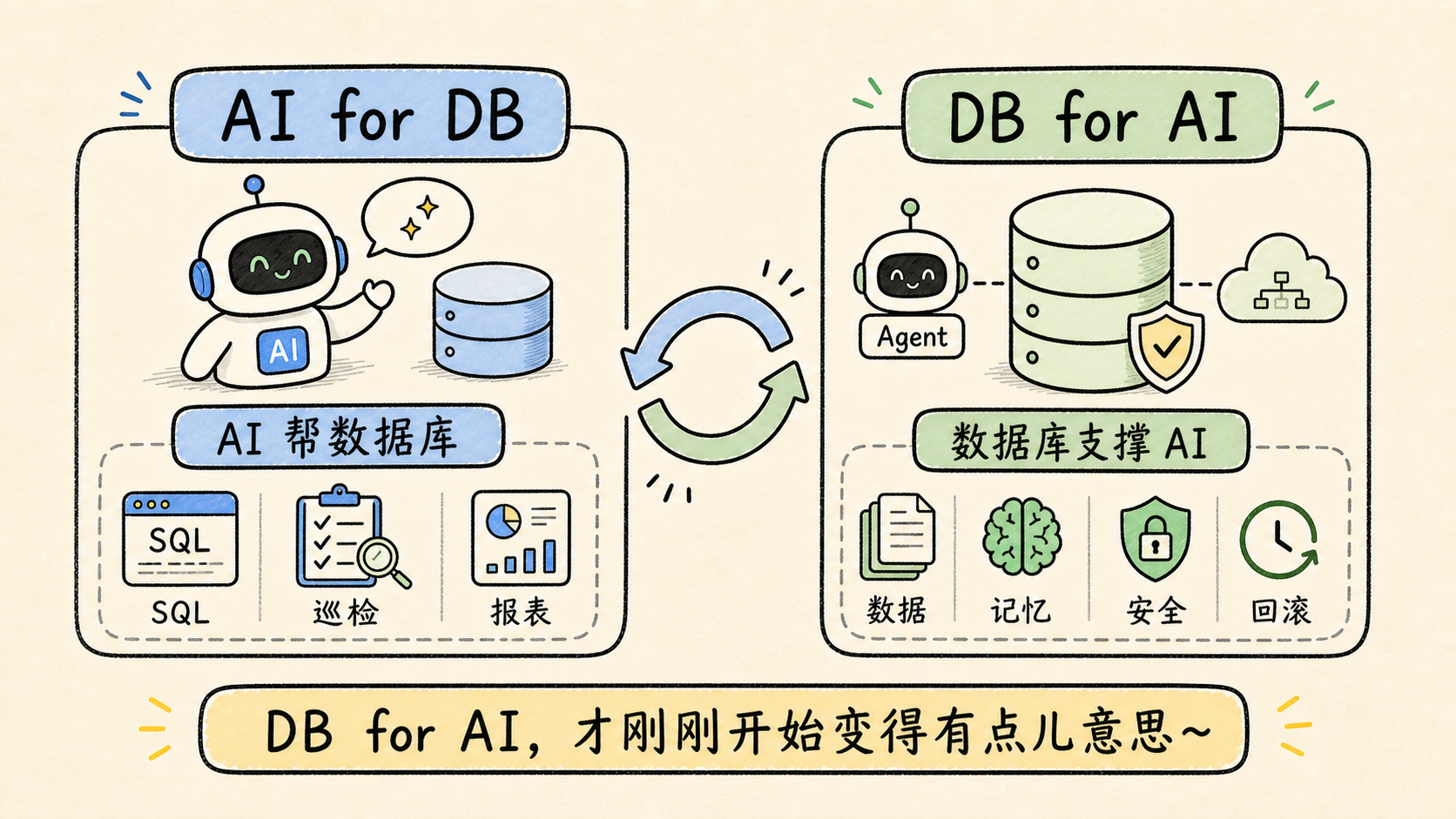
OceanBase positions Lakebase in the second camp. AI-agent workloads can benefit from governed multimodal data, hybrid retrieval, isolated experimentation, and durable memory, although the right design depends on the application’s scale, risk, and existing data estate.

The work is still emerging: as AI agents become database users, data systems will need to evolve to support them safely and effectively.