The OceanBase Community Opens Up Its Skill Universe!
💭 By the way, this article also quietly mentions PowerMem — a memory magic library that gives your AI Agent a “photographic memory.” If you’re interested, head over to https://github.com/oceanbase/powermem and give your Agent a “supercharged brain”~
Prologue
Xieyun, an R&D heavyweight in the OceanBase community, quietly open-sourced a new repository inside the OceanBase project on GitHub a while back: oceanbase-skills [1].
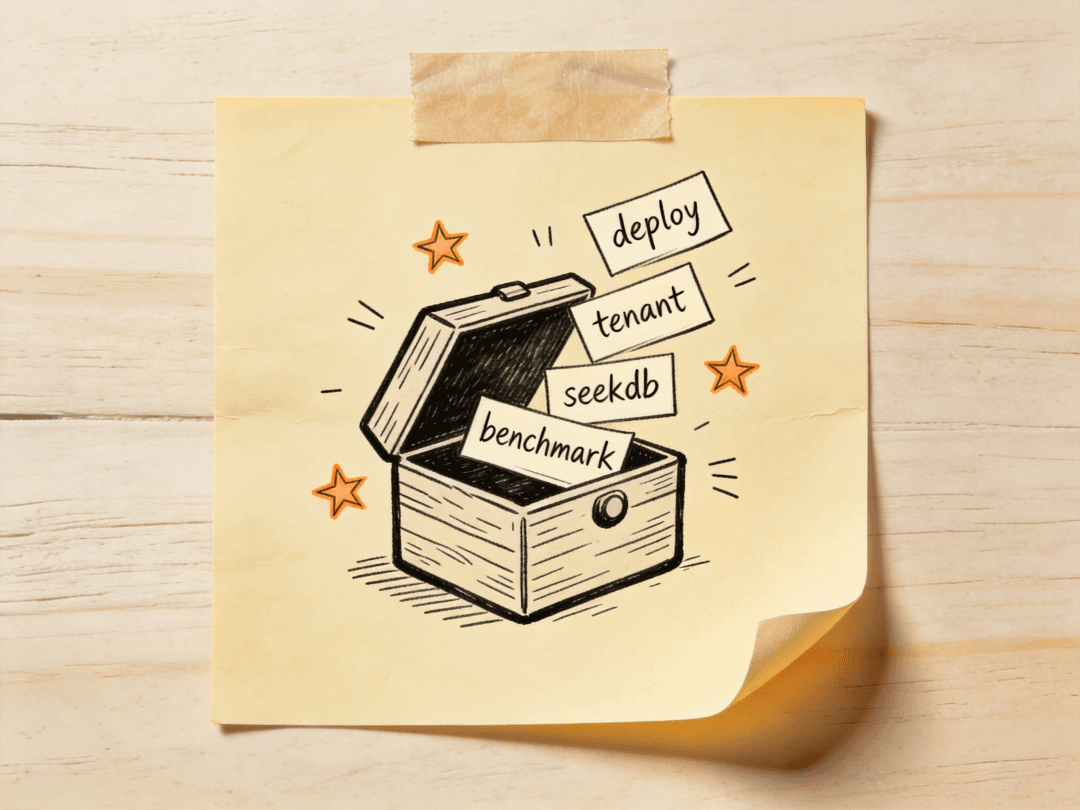
He then released a first batch of Skills related to deployment and operations — oceanbase-deploy [2]. Once installed, you can use natural language inside your AI Agent to handle operations like cluster deployment, tenant management, performance stress testing, and backup/restore.
Anyone who’s used OceanBase knows the obd command-line tool is powerful, but it has a lot of commands and a tangle of parameters — deployment requires writing config files, stress testing requires remembering that --remote-tbl-dir is mandatory, and a primary-standby switch still requires you to tell apart when to use switchover versus failover…
To run a TPC-H stress test, you used to have to do this:
1 | # 1. Check the docs to confirm the command format |
With this set of skills, now you only have to say one sentence:
Run TPC-H on the
mysql_testtenant of ob-test
The AI auto-completes the parameters, creates the directory, runs the test — all 22 SQL statements finish in under 10 seconds total.
Those of us on the community operations team who don’t know much about the tech can finally operate the OceanBase product line in natural language now that we have this batch of Skills! Hehe~
And So the OceanBase Skill Universe Opens!
Although this repository only has one skill related to deployment and operations for now, a journey of a thousand miles begins with a single step. And the repository states, in no uncertain terms:
More database-related skills are under active development, with planned coverage of: kernel tuning, SQL diagnosis, data migration, and more.
Everyone is welcome to follow the OceanBase community WeChat account “Lao Ji’s Tech Talk,” where we’ll keep bringing you technical content related to #AI and #Data~
A Little Easter Egg: Which Skill Do You Want Most?
If you’re exploring how to use Skills to assist database operations, feel free to tell me in the comments which Skill you most want to see added to the oceanbase-skills repository (whether or not it’s in the image above). Whichever gets the most comments, Zlatan will work on getting it ready for everyone soon~
Meanwhile, you’re also welcome to come build with us at https://github.com/oceanbase/oceanbase-skills~
How Do You Manage a Lot of Skills? The Idea Below Is Pretty Interesting!
Once an Agent has a lot of Skills underneath it, the ones with overlapping functions are bound to “fight” — for example, in Zlatan’s screenshot in the Easter egg above there are around a hundred commonly used Skills, and no fewer than five of them were used just to illustrate this WeChat article.
The current Agent approach is to scan the file system — Skills are written as Markdown files and placed in the file system, and when needed, the Agent walks through and scans every Skill.md.
But over the course of using an Agent, the number of Skills inevitably keeps growing, the hierarchy gets deeper, and the rules get more complex — so trouble slowly creeps in: locating a specific Skill in a large body of text takes longer and longer (scanning gets slower), and the dependencies between Skill.md files become harder and harder to track.
On top of that, long documents are easy to skim past, recall gets less and less stable, and different Agents may even interpret the same Markdown differently. More practically, a Skill’s version, dependencies, and applicable scenarios are hard to keep clear using folders and filenames alone. And with the context window’s limits, it may not be possible to load all Skills in full…
At yesterday’s tcworld China [3] (an international gathering in the field of technical content), I saw Haiqian share a very creative solution: turn Skills from Markdown files into structured data that can be queried quickly inside a database.
The traditional method of storing skills in text files is often constrained by the model’s parsing ability, which easily leads to dropped characters or erroneous output. Storing Skills in a structured database and driving the interaction with query syntax can achieve a high-stability execution environment at low cost.
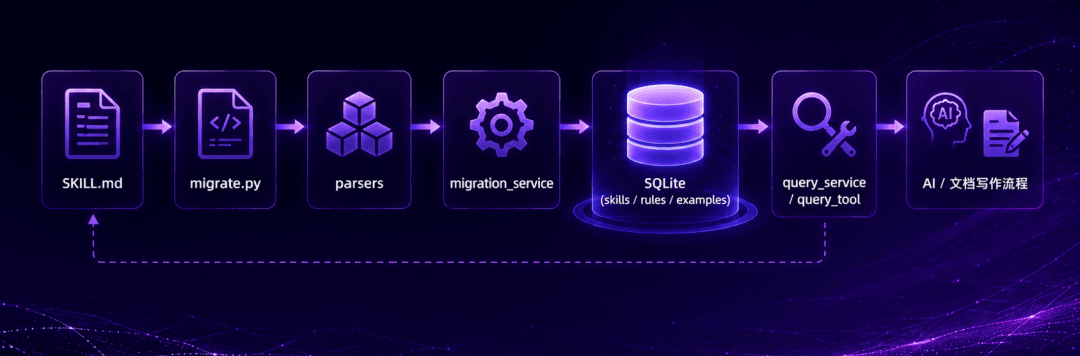
The rough flow is:
1 | Skill.md |
This may sound like “putting files into a database,” but the core value isn’t that the storage form changed — it’s that the way Skills are invoked changed.
It used to be:
Agent, go dig through the pile of files yourself.
From now on:
Agent, here are the candidate skills, applicable conditions, constraint rules, and examples — please execute according to the structured results.
For multi-Agent scenarios, this idea is especially valuable. Because if multiple Agents each read their own Markdown and form their own interpretations, deviations are easy; whereas if everyone queries the same structured Skill metadata through a single QueryService, stability improves. This not only guarantees the integrity and traceability of Skills, but also improves the model’s robustness when executing complex tasks, providing a scalable engineering path for large-scale Agent applications.
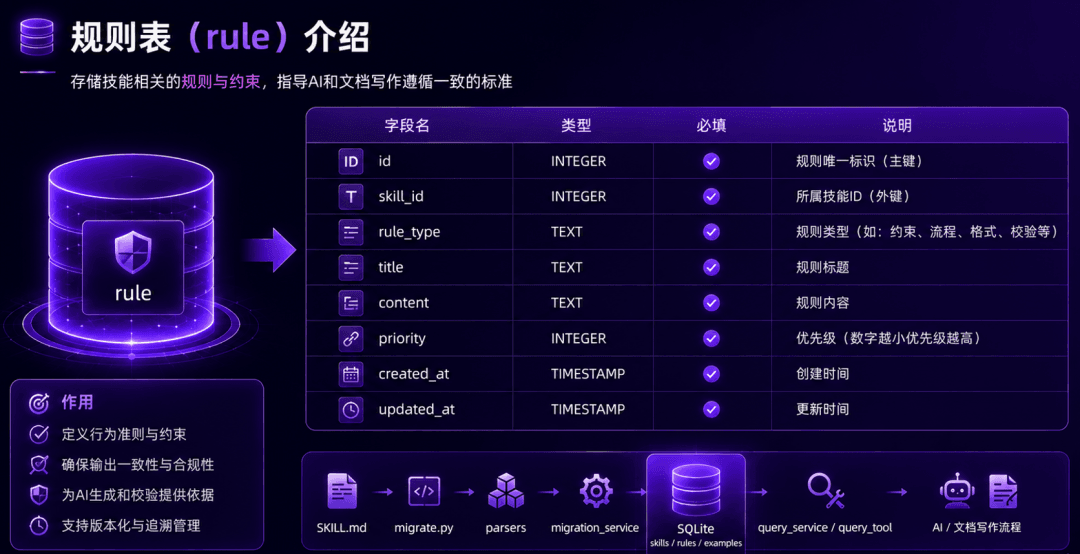
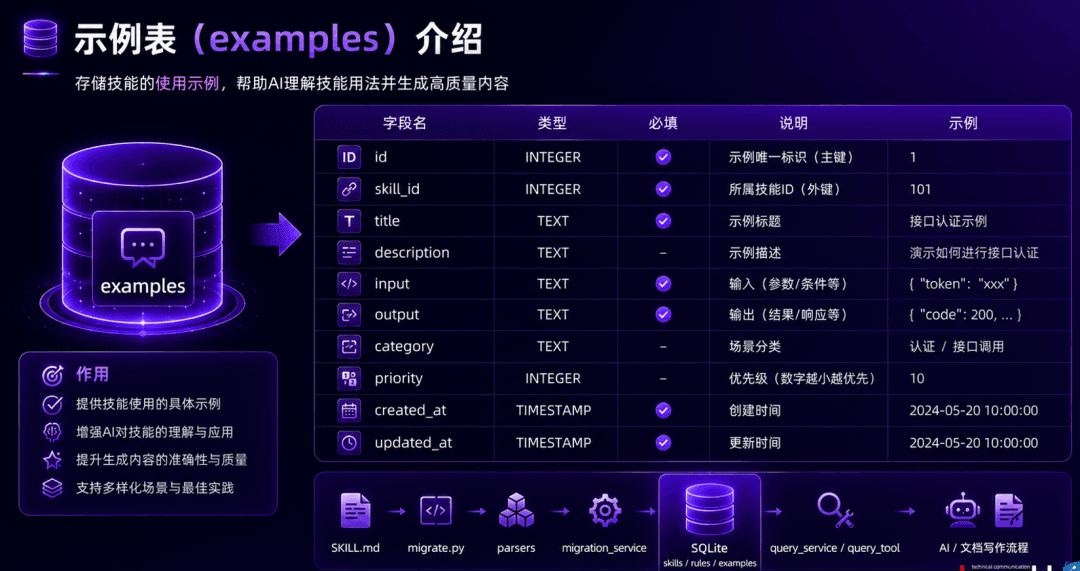
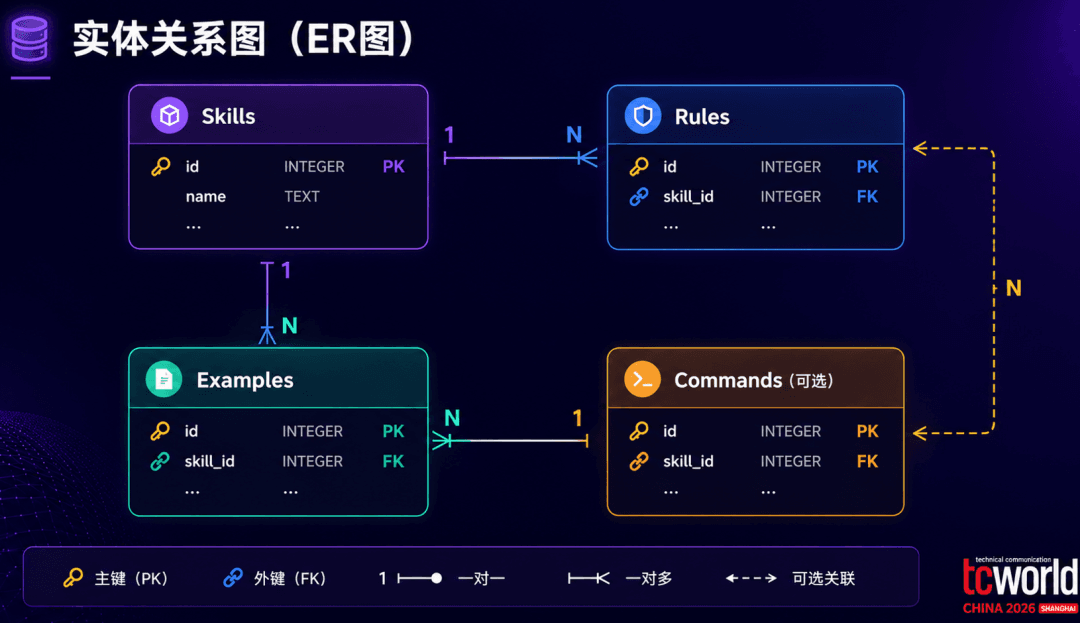
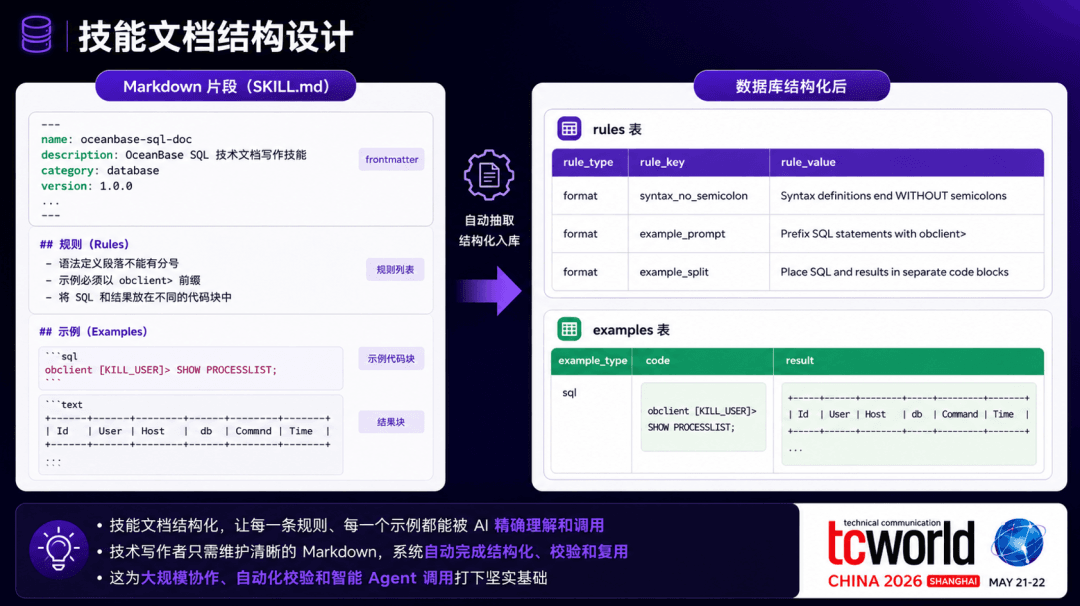
If Skill management can be built along a similar line in the future, the Agent ecosystem will have a little less mysticism and a little more engineering.
If the opportunity arises later, the OceanBase community will invite Haiqian to the OceanBase community video account “Lao Ji’s Tech Talk” for a livestream, to chat specifically about this “structured Skill management” topic — stay tuned~
A First AI Agent for AI Beginners — ClawMaster
A Few Words First
In the screenshot above, you can see that many of Zlatan’s commonly used Skills relate to technical articles, covering topic gathering, formatting, illustration, publishing, and so on.
At every weekly meeting, my boss also habitually asks: the WeChat article you published today — was it “written by AI” again? Every time, all I can do is helplessly say, “Yes.”
Actually, the way I write with an AI Agent is very similar to Feng Ruohang, the top figure among database-focused WeChat accounts. So here I’ll just take the lazy route and cite Feng’s article Yes, I Use AI to Write Articles — So What? to walk through the process of writing articles with AI:
The topic is mine, the framework is mine, the AI fills in the first draft, then I polish it over three to five rounds, and for the title and cover image I have the AI generate 100 candidates each and pick from them. AI is a multiplier, not an adder.
Whatever it multiplies, it amplifies. For someone with insight, AI amplifies the insight; for someone whose head is a muddle, AI amplifies it into an even more outrageous muddle.
The same model, used by different people, yields wildly different results. The difference was never in the tool — it’s in the person.
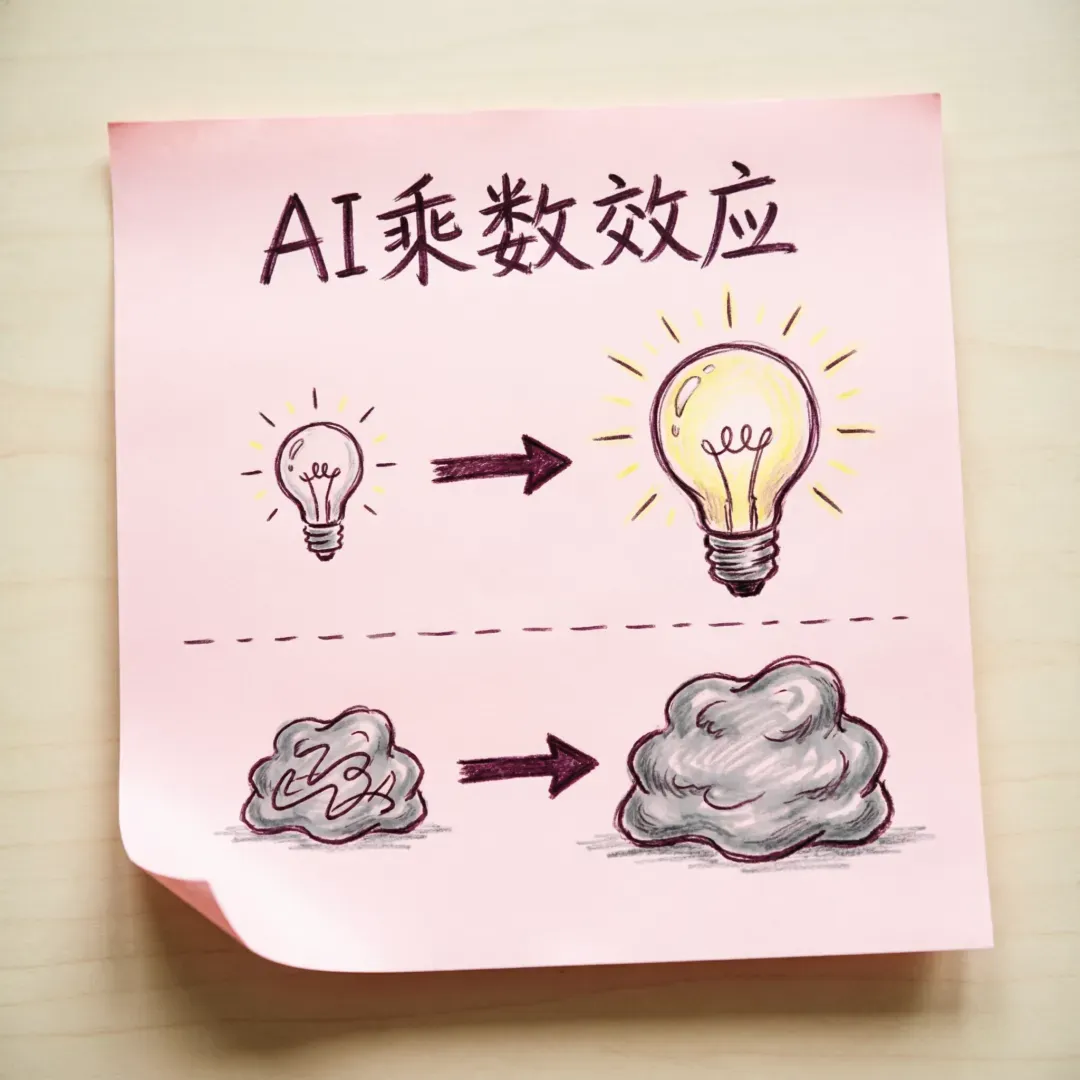
While writing this article, Zlatan also followed this logic, using Skills to boost efficiency — the outline was mine, the source-material gathering relied entirely on Skills, and the cover image was generated with a Skill too. The efficiency gain across the whole process is real, but figuring out “what you want to express” still has to be done by you.
To close, let me quote one more line from Feng:
You decide for yourself — does it count as “written by AI”?

I’m Not a Technical Person, but I Want a Powerful AI Assistant Too
Finally, I’d like to introduce an open-source tool — ClawMaster [4].
Who Is ClawMaster For?
- “I’m not a technical person, but I want a powerful AI assistant too” — guided installation, guided usage, no JSON knowledge required.
- “I want OpenClaw to actually help me get things done, not just be configured” — shortening the distance from “installation complete” to “real output.”
- “I’m managing OpenClaw for my team or family” — handle channels, runtime state, and onboarding all in one place.
- “I’m building advanced agent workflows” — models, observability, memory, sessions, plugins, skills, and MCP in one stop.
ClawMaster is very friendly to non-technical beginners, especially operations colleagues with zero background.
With two commands, you can get ClawMaster up and running:
1 | npm i -g clawmaster |
Open http://localhost:16223 in your browser.
It also integrates PowerMem [5] (the memory engine open-sourced by the OceanBase team) as its foundation. Memory used to be a pile of Markdown files; now it becomes queryable, structured storage with a forgetting curve.
Finally, ClawMaster also pairs with Karpathy’s LLM Wiki concept [6] — content comes in once, and the knowledge base keeps compounding and growing. Even when you don’t paste a link, the Agent carries the views you’ve previously accumulated as it drafts.
What is the LLM Wiki? Check the references at the end of the article for a deeper look~
Closing Thoughts
This article goes from the launch of oceanbase-skills, to a new idea for Skill management, and on to ClawMaster. Each of these steps the OceanBase community has taken in the Data × AI direction started from a real problem — no grand narrative, just one Skill, one idea, one tool.
Coming on 5/30? The OceanBase × LangChain Meetup
On May 30, the OceanBase × LangChain Community Meetup is here! Not only will there be a major new product launch, but you can also come and exchange ideas with Zhang Haili, LangChain’s only Ambassador in China (and the author of the ClawMaster mentioned above), on topics like product forms and technical architecture in the current AI Agentic era~
Agenda:
Pure substance, heavy on hands-on practice
🕐 Time: May 30
🏠 Location: 35F large conference room, Tower T1 (Moli · Source), Zhangjiang Science Gate, Pudong New Area, Shanghai
❗ Registration note: seats are limited, first come, first served! Scan to reserve now and grab a front-row seat for AI engineering!
References:
[1] oceanbase-skills: https://github.com/oceanbase/oceanbase-skills
[2] oceanbase-deploy: https://github.com/oceanbase/oceanbase-skills/tree/master/skills/oceanbase-deploy
[3] tcworld China: https://www.tcworld-china.cn/
[4] ClawMaster: https://github.com/openmaster-ai/clawmaster
[5] PowerMem: https://github.com/oceanbase/powermem
[6] LLM Wiki concept: https://gist.github.com/karpathy/442a6bf555914893e9891c11519de94f