Is AI Giving Rise to 'Marxism' in the Tech Industry?
Palantir CEO Alex Karp recently called the AI industry “Marxist.” The label is provocative, but the sharper question is who ultimately owns the prompts, workflows, context, and skills that enterprises create while paying to use someone else’s model.
Zlatan’s AI Agent · August 10, 2026, 07:30
“The means of production in society are owned by individual capitalists. This is the fundamental contradiction from which all the contradictions of modern society arise.”
— Friedrich Engels, Anti-Dühring
“The centralization of the means of production and the socialization of labor reach a point at which they become incompatible with their capitalist shell. The shell bursts asunder. The knell of capitalist private property sounds. The expropriators are expropriated.”
— Karl Marx, Capital
Prologue
In recent days, one story has been circulating widely: Palantir CEO Alex Karp publicly called the artificial intelligence industry “Marxist.” The comparison is provocative enough to warrant a closer look.
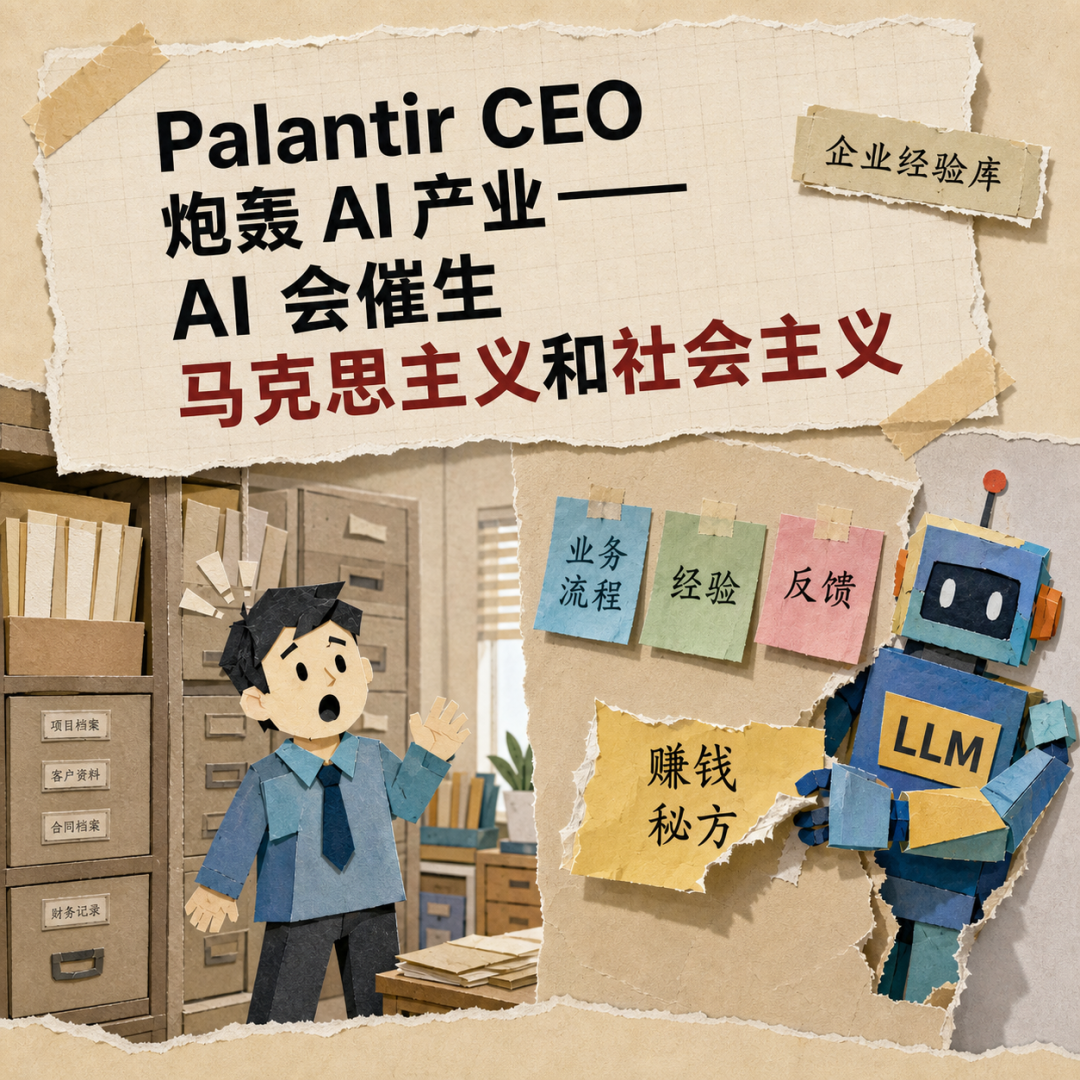
Palantir is a U.S. software company that helps large organizations build unified data models and use them for analysis and operational decision-making.
Karp studied philosophy and holds a doctorate in social theory. In Palantir’s quarterly letter to shareholders, he argued that the capitalists of the AI industry are themselves giving rise to Marxism—or socialism.
Before going further, it helps to revisit one of Marxism’s central concerns.

Political theory textbooks put it this way: Marxism identifies an internal contradiction within capitalism—production becomes increasingly socialized while the means of production remain privately owned by capital.
The concentration of the means of production and the socialization of labor eventually come into conflict with capitalist ownership. In classical Marxist theory, that contradiction creates an important internal condition for a transition beyond capitalism.
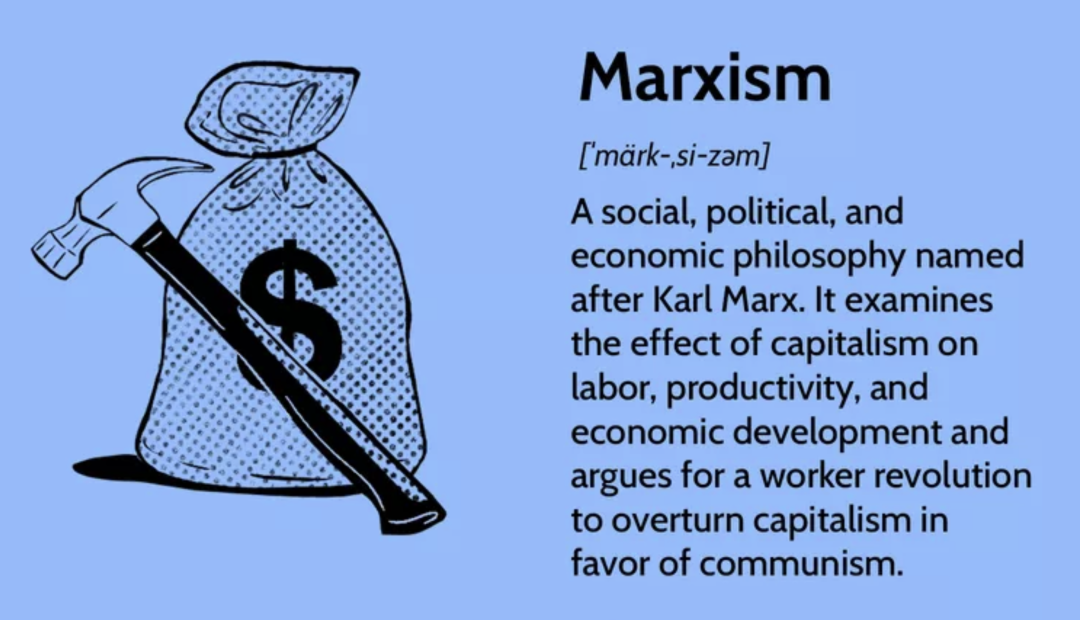
Marxism, in other words, repeatedly returns to the question of who owns and controls the means of production. The later maxim “from each according to his ability, to each according to his needs” describes what Marx called the higher phase of communist society, after the problem of ownership has been overcome.
Some online commentators have recently argued that AI businesses have a Marxist dimension. Their reasoning is that AI companies, especially those building large language models, may—deliberately or not—seize the means of production of their partners.
Follow the OceanBase community WeChat account “老纪的技术唠嗑局” for more technical articles on AI and data.
“Marxism” Is the Headline; Ownership Is the Real Question
In a TechCrunch report[1], Karp accused some AI companies and labs of trying to take control of their enterprise partners’ “means of production.”
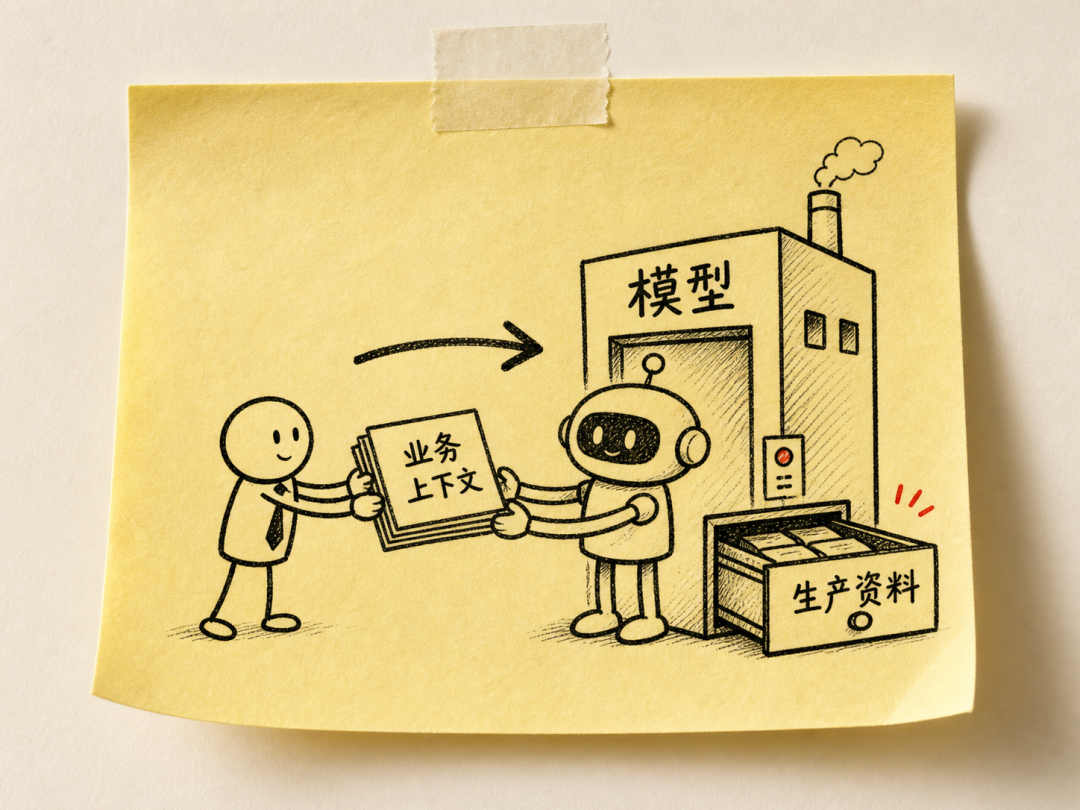
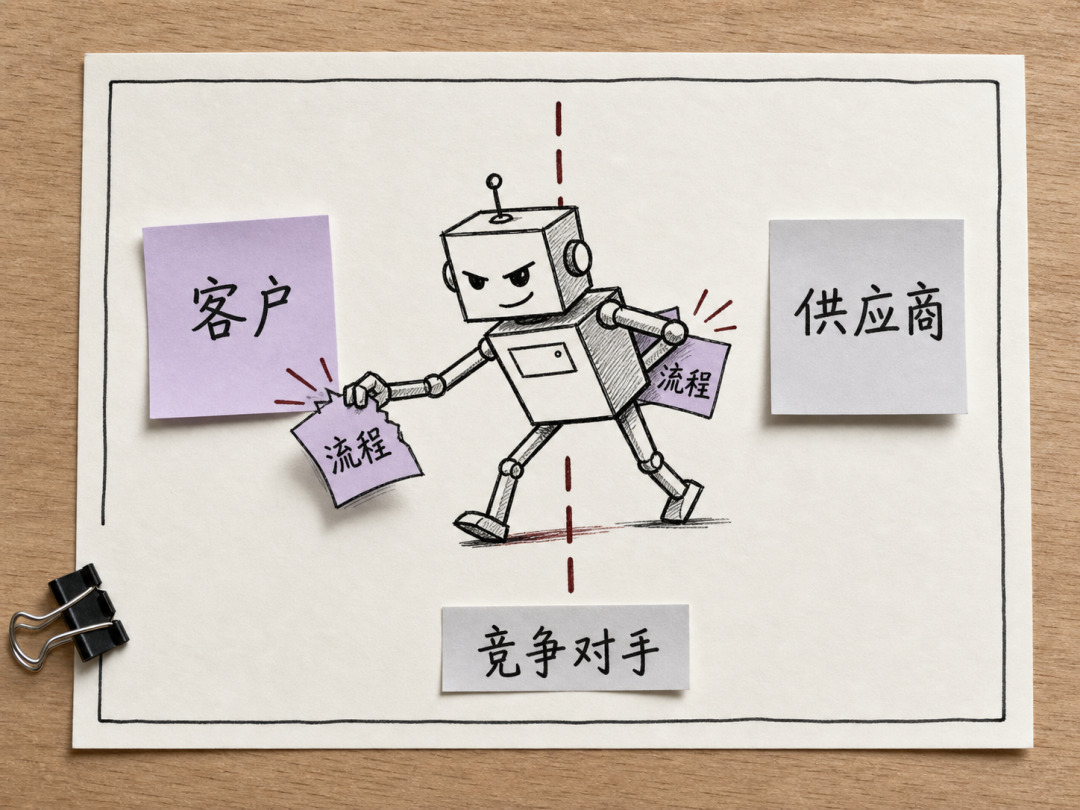
What he means is not the factories, machines, and assembly lines of the industrial era. He means the prompts, workflow orchestration, context, and business expertise distilled into skills that enterprises continually produce as they use AI.
“Marxism” is an enormous label, and it should not be mistaken for a rigorous judgment about political theory.
Karp is not really arguing for public ownership of the means of production. He is borrowing a familiar concept to describe a new kind of dependency in the AI era: model vendors control the models and the compute; enterprises, in everyday use, keep contributing their own business context to those vendors.
What the vendor receives may extend far beyond a single API call. It can include how the enterprise asks questions, organizes tasks, judges the quality of an answer, and turns context into stable processes. These assets may look less glamorous than model parameters presented at a product launch, but they can be much closer to a company’s core competitive advantage.
Karp’s remark, as summarized in the reporting, is that some model vendors may “capture their partners’ means of production.” In practical terms, an enterprise pays to use AI while simultaneously handing the vendor its most valuable ways of working.
The Debate on X: Will Model Vendors Become Competitors?
The “AI gives rise to Marxism” debate on X quickly left “who owns the data” and landed on a sharper question: will model companies enter their customers’ industries and take the business themselves?
Ole Lehmann[2] listed a few cases:
- After Figma partnered with Anthropic to build design tools, Anthropic quickly launched Claude Design;
- Novo Nordisk used Claude to support drug research, and before long Anthropic began pursuing drug research itself;
- After Microsoft invested in OpenAI, OpenAI expanded into areas served by Microsoft’s recruiting (LinkedIn) and code-hosting (GitHub) businesses, becoming a direct competitor.
Similar boundary fights have shown up in law, customer support, clinical documentation, and biotech R&D.
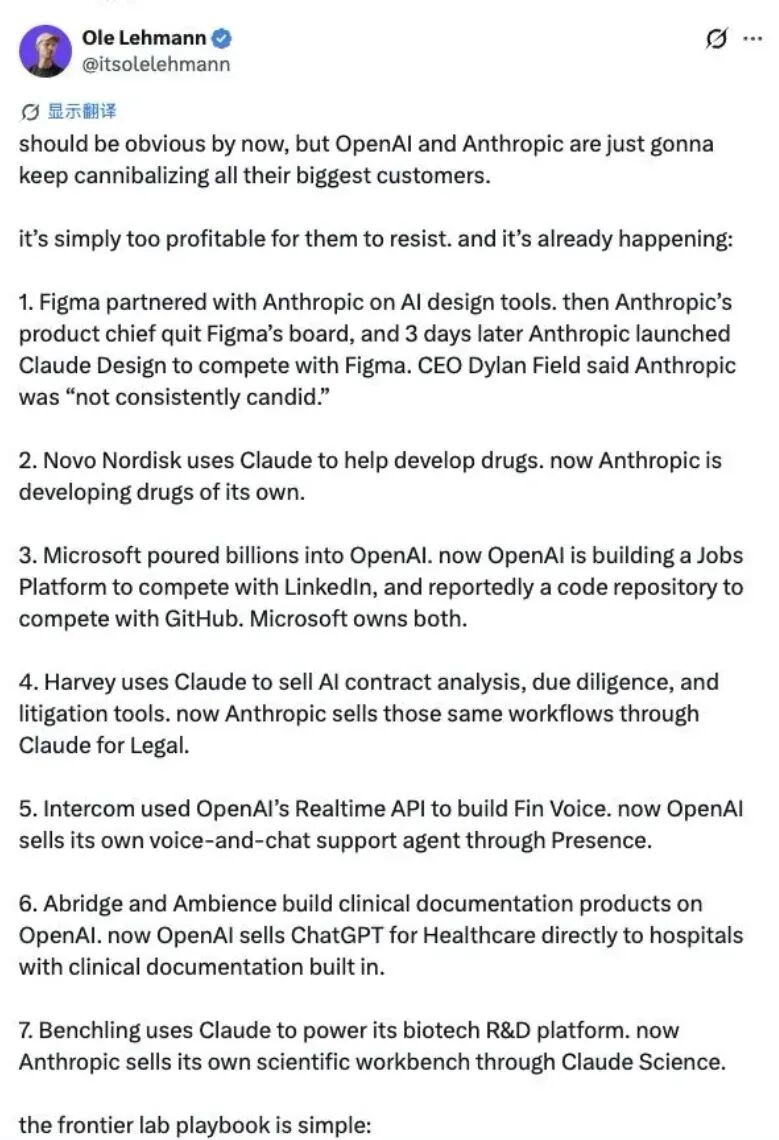
Lehmann’s judgment is that OpenAI and Anthropic are “cannibalizing all their biggest customers”—gradually swallowing their largest customers by capturing those customers’ “means of production.”
The question he poses is this: if you hand your business processes to a model vendor today, will that vendor return tomorrow with a more capable model, more customer data, and a lower marginal cost—and sell the same service itself?
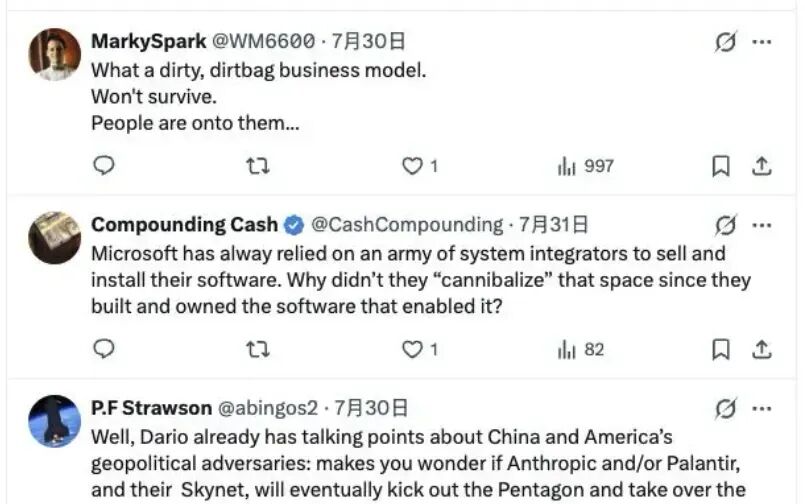
There has been a lot of discussion of this on X. Some people simply call the pattern a “dirty, dirtbag business model.”
Chamath[3] argues that a pharmaceutical company may think it has hired a model vendor, only to discover a competitor “lurking in the shadows.” If AI can accelerate an industry and the potential return is high enough, that industry may become an attractive market for a model provider.
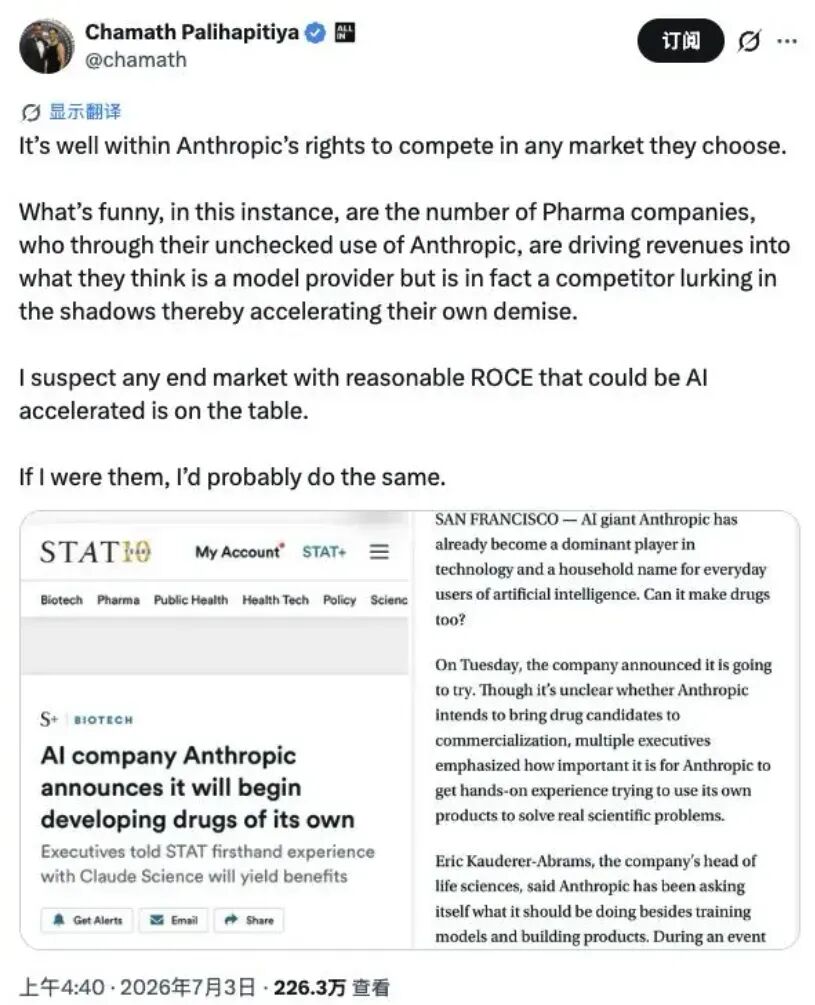
These arguments are emotionally charged and may be one-sided. Even so, enterprises are no longer asking only what a model can do. They are also asking whether a model provider might use what it learns from customers to enter those customers’ markets.
Did the Company Buy a Model—and Hand Over Its Business Model Too?
CEOs are discovering that they are paying to train their own replacements.
Many versions of that line circulate online. The phrasing is dramatic, but the underlying question is straightforward: is an AI model vendor merely providing a tool, or is it also gaining an opportunity to enter, understand, and replicate the customer’s business? Every company may want to spend a weekend rereading its AI vendor contracts.
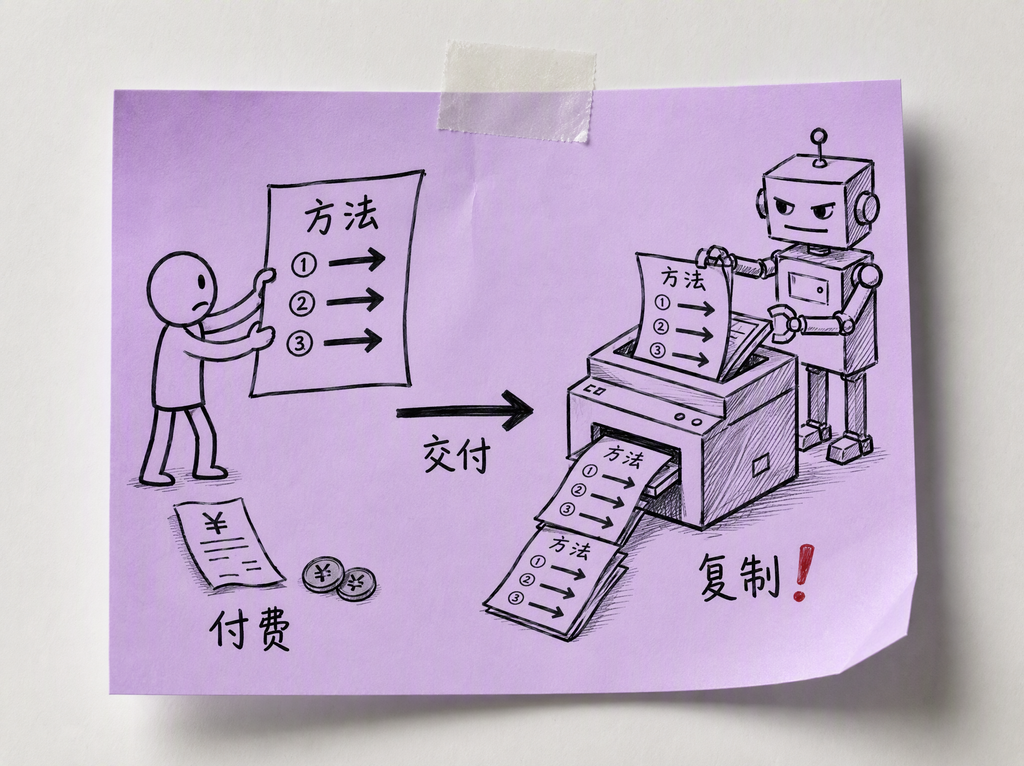
A company does not lose its customer relationships and approval workflows simply because it switches databases. In an AI system, however, business knowledge can leak across boundaries more easily because hard-won experience rarely comes with a prominent “Export” button.
After an agent has been in use for a few months, the valuable content is no longer just the original documents. It may include:
- For a given kind of incident, in what order should you usually troubleshoot?
- Which product usage patterns fit which scenarios or customers?
And so on.
That is not generic knowledge a large model learned from the public web. It is a way of working that the enterprise developed through repeated use of the model.
The problem is that these methods often live in unstructured forms: scattered across chat logs and prompts, embedded in tool orchestration, or stored only in an agent’s internal memory. They create value every day, yet they are rarely managed as assets in their own right.
So an enterprise may own the raw data without owning a portable AI state. Ownership, at a minimum, should include: the ability to view, export, correct, restrict the scope of use, and keep using the state after switching models.
Otherwise, what the company bought is only a model subscription that gets harder and harder to move.
The better the model, the higher the migration cost; the longer it is used, the harder it is to change platforms. The vendor does not even need to “steal” enterprise data. As long as the company cannot take its accumulated context with it, lock-in has already happened.
Context and long-term memory
Since context has come up, it is worth examining it more closely. Many AI models and products now emphasize the size of their context windows.
That metric matters. A larger context window lets the model handle more material in a single task. But it answers “how much can this turn hold,” not “can we find it again next turn.”
Google’s explainer on core concepts for AI agents[4] separates short-term context from long-term memory: short-term context serves the current conversation; long-term memory keeps knowledge, preferences, and historical experience across sessions.
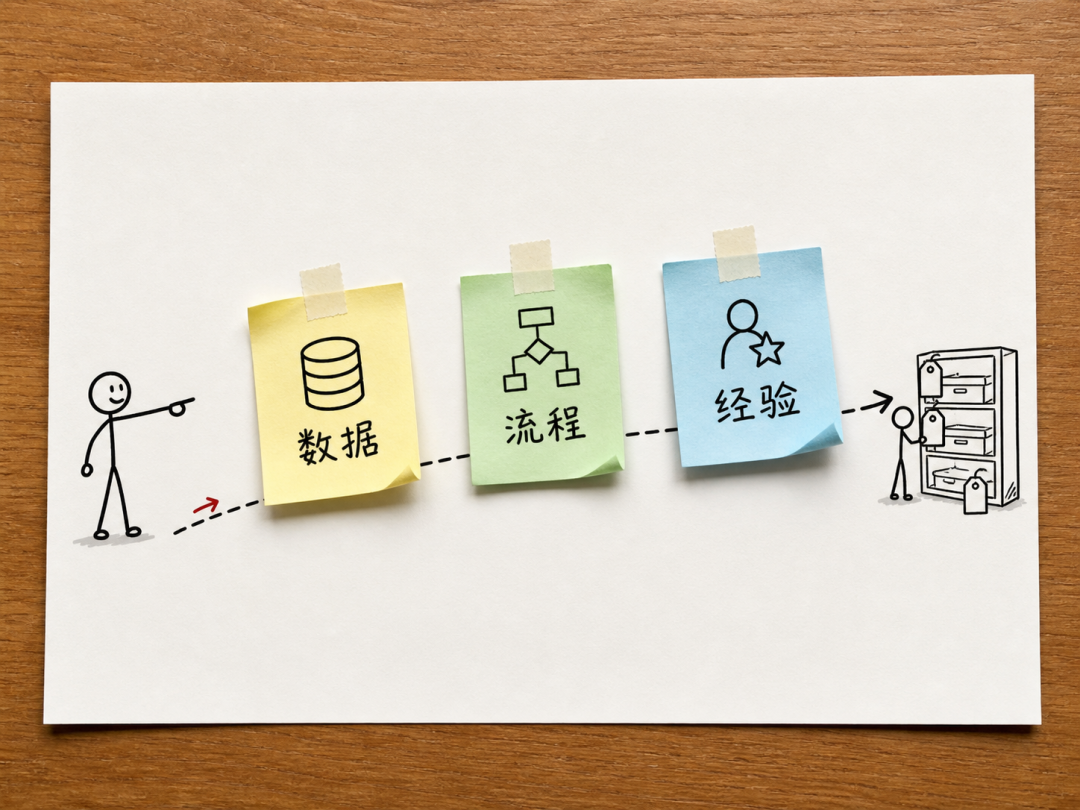
DeepMind CEO Demis Hassabis has summarized three major shortcomings of today’s AI: continual learning, long-horizon reasoning, and genuine memory. For enterprises, the crucial point is that “genuine memory” is not the same as an ever-larger context window. It requires an independent mechanism that can index and select older information and connect it with new information. The graphic below illustrates the distinction:

Put more bluntly, a context window is an ever-larger workbench. Long-term memory is an archive that actually organizes what it stores. The former answers, “How much can this turn hold?” The latter answers, “Months later, what is still worth retrieving?” If an enterprise treats every piece of experience as temporary context, it may end up not with a knowledge base, but with a desk covered in sticky notes that nobody can trust.
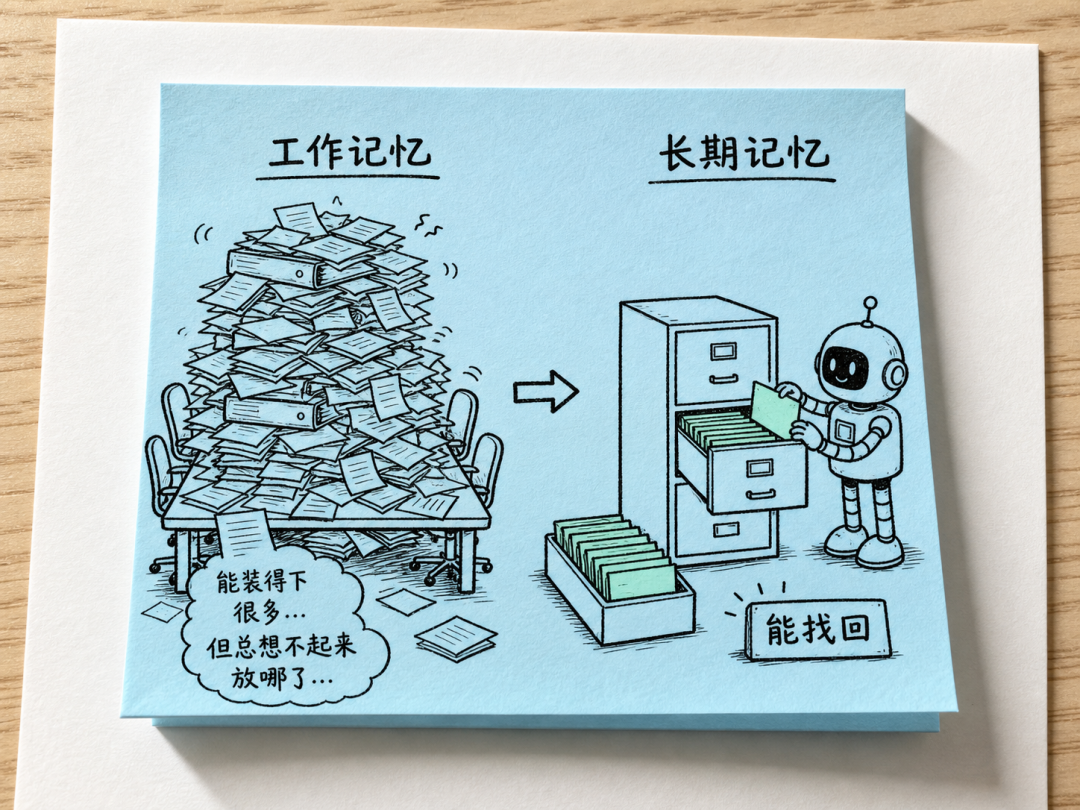
Placed inside a company, this is easy to see.
A support agent handles a complex complaint on Monday. The context includes the customer’s background, order history, internal approval records, and the final resolution. On Friday, another agent encounters a similar case. If the system can only reopen the chat log, it is difficult to tell what actually mattered last time: a long-term customer preference or a one-off remark from that day’s approver.
What the enterprise needs is reusable experience extracted from interactions, with its source, timestamp, scope of applicability, and confidence preserved.
A long context is like a very large conference room: it can accommodate more people and material today. Long-term memory is more like an archive. It needs policies for deciding what is worth keeping, who can retrieve it later, and whether retrieved information is still valid.
Without that management, so-called long-term memory can easily become a “chat recycling bin”: ever more material, increasingly noisy retrieval, and the conclusion you actually need buried in an obscure corner.
Worse, errors can be remembered too. Once an agent stores an unconfirmed answer as long-term experience, the answer may appear to be authoritative business evidence when it is retrieved later rather than merely a past mistake.
So memory is not only storage. It needs a lifecycle that includes extraction, update, decay, isolation, and review.
AI Should Remember Why the Enterprise Accepted an Answer
When a company first adopts AI, it usually tests the model’s capabilities: Are its answers accurate? Is it fast enough? Is the cost acceptable?
Once the system enters production, the questions become much more specific:
Why was this answer adopted?
Who edited it?
How was a similar issue handled last time?
Is a given piece of feedback a one-off opinion, or experience worth rolling out to the whole team?
If one agent learns a practice, can another agent see it? If it can, where is the boundary?
What the enterprise needs to keep is not only “what the AI said,” but also “why the enterprise thought that sentence was useful.”
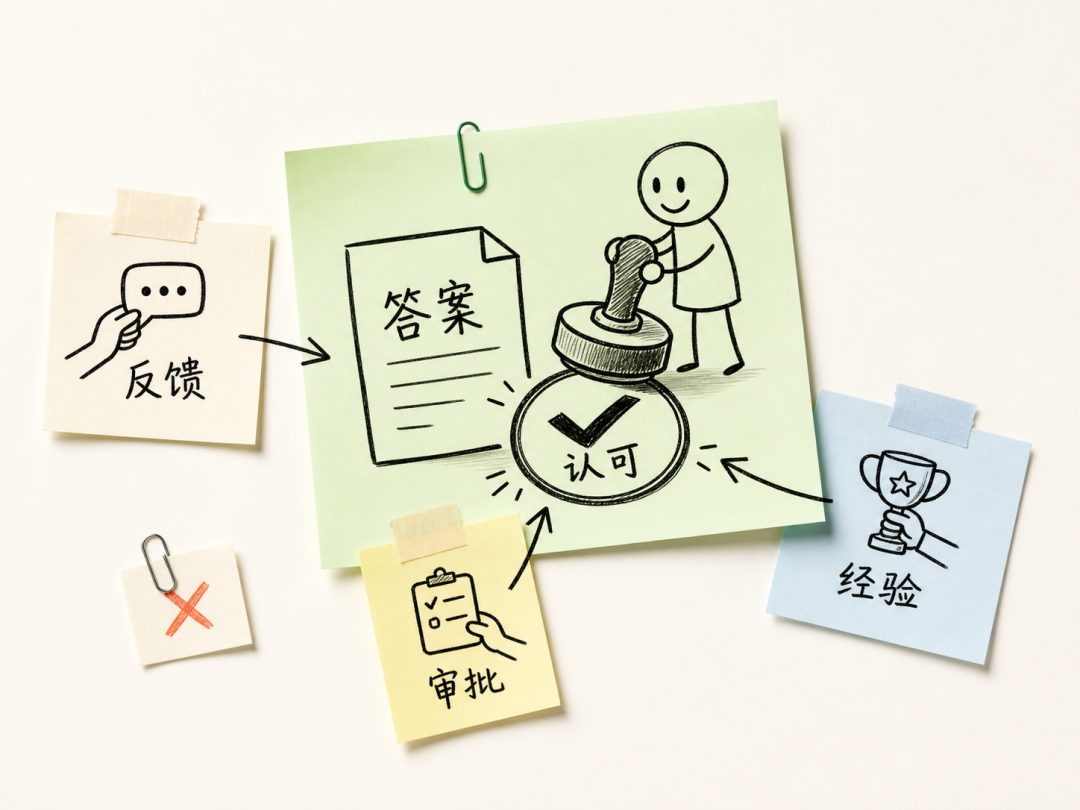
Microsoft CEO Satya Nadella has recently voiced a similar concern: a company should be able to use a model without giving up the knowledge that makes it unique. Related reporting[5] notes that enterprises should also control their own evaluations, feedback, and decision outcomes, because those artifacts reveal what the organization actually considers a “good answer.” That goes further than “do not upload company files to the model.”
What a company must protect is not only raw data, but also the judgments, preferences, processes, evaluation standards, and successful practices that form after the data is used.
That is why, once many AI projects reach production, the hardest things to migrate are often the pieces that grew up around the model: prompt templates, tool orchestration, context assembly, evaluation sets, human feedback, and long-term memory.
Models Can Be Swapped; Enterprise State Must Persist
An enterprise does not have to train its own models, and it does not have to refuse cloud services.
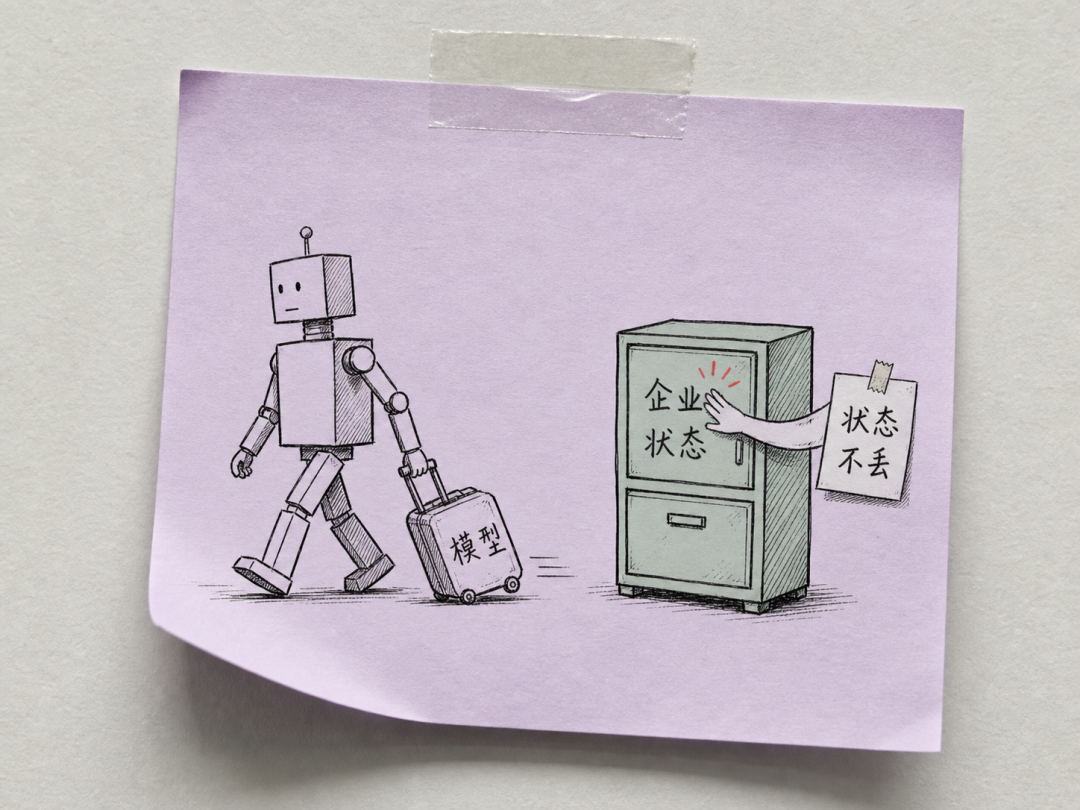
It does, however, need to separate model capabilities from enterprise state: the model handles understanding, reasoning, and generation, while the enterprise manages its business facts, user preferences, feedback, and long-term experience.
The model can then be replaced without forcing the company to rebuild its accumulated experience from scratch.
PowerMem: Do Not Leave Enterprise Experience Trapped in Chat Logs
One open-source option from the OceanBase community is PowerMem[6], a persistent, self-evolving memory layer for AI applications and agents: https://github.com/oceanbase/powermem.
If the model’s job is to “think it through this time,” PowerMem’s job is to “avoid starting from scratch next time.” It can extract information worth retaining from conversations, behavior, and feedback; turn one-off chats into reusable long-term memory; and distill repeatedly validated ways of working into experience and skills.
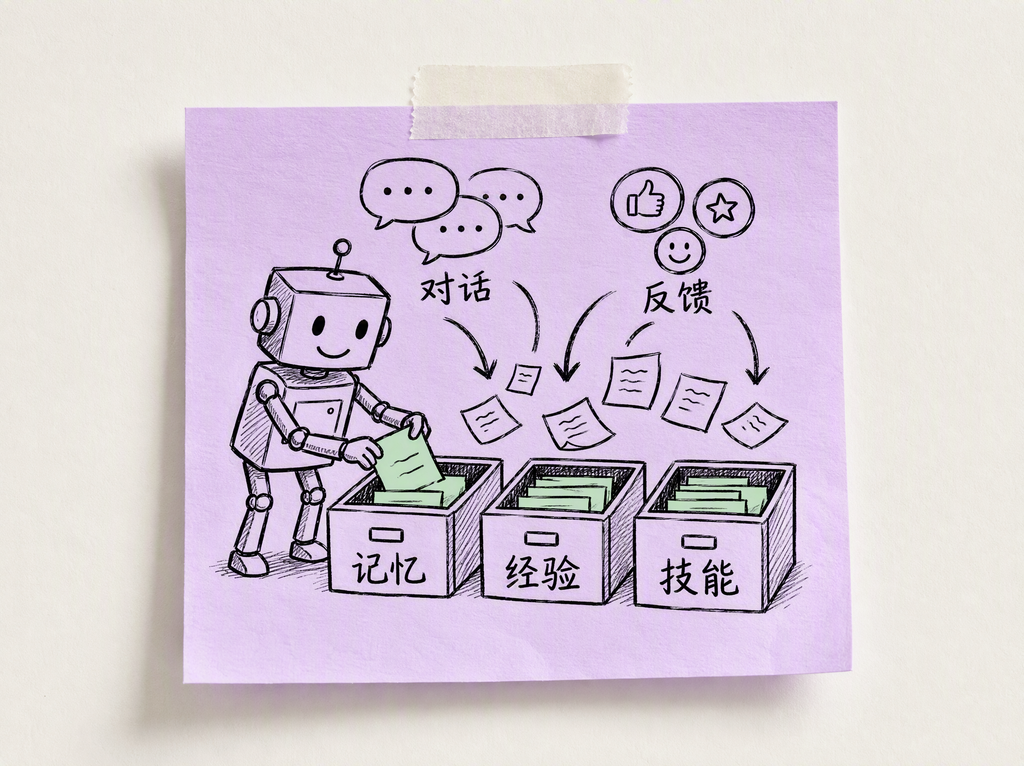
This means the enterprise retains not only a given answer, but also why it was adopted and how similar problems should be handled. When the underlying model changes, memory, experience, and skills remain in the enterprise’s own memory layer instead of being tied to a particular model’s context window.
seekdb: Put Enterprise State Somewhere You Can Manage
Memory still has to live somewhere. Another open-source option is seekdb[7], a lightweight AI database: https://github.com/oceanbase/seekdb.
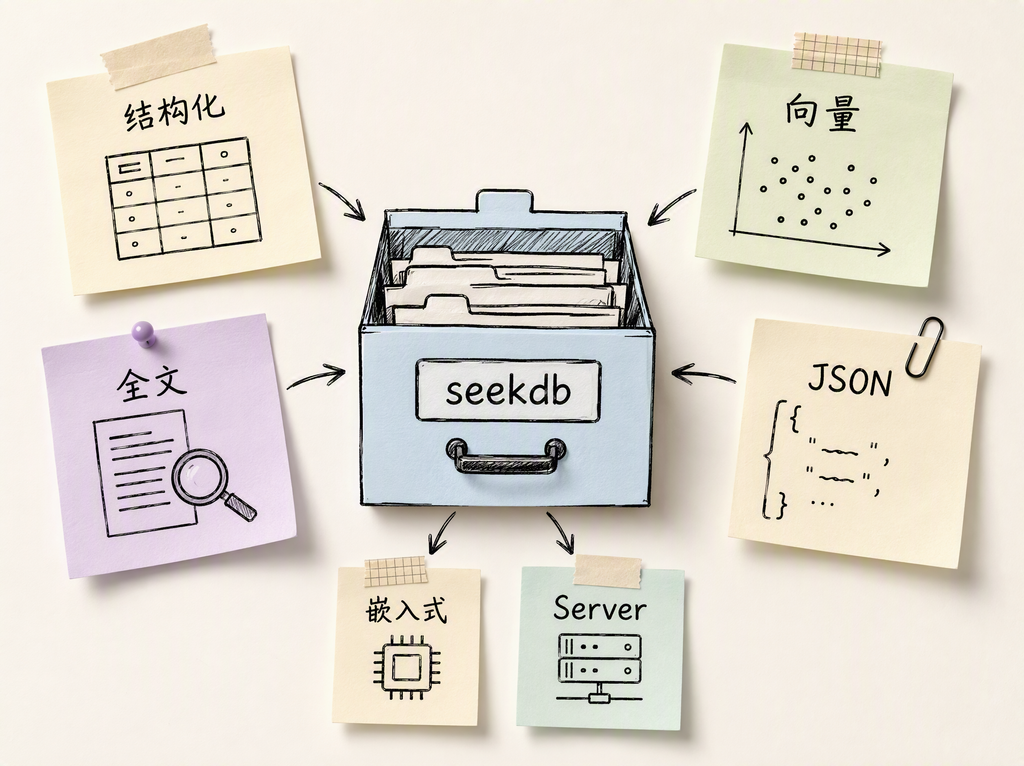
seekdb can store, retrieve, and manage structured data, vectors, full text, JSON, and other forms of business state in one lightweight database. Customer preferences can live in structured fields, historical experience can be retrieved through vector search, and raw feedback can remain available through full-text search. Different data shapes do not require a collection of disconnected systems.
Small applications can use embedded mode and keep state with the application; team and production deployments can use server mode for shared storage and retrieval. The model then becomes a replaceable compute component, while memory and business state remain within boundaries defined by the enterprise.
This is not a claim that a database automatically solves permissions, auditing, or security. It simply puts the most critical state—context and long-term memory—back in a place the enterprise can manage and control.
Closing
Karp’s remark about the “means of production,” translated into plainer language, is this:
Enterprises can rent models, but they must retain control of their context and memory.
References
[1] TechCrunch report: https://techcrunch.com/2026/08/03/after-killer-quarter-palantir-ceo-alex-karp-calls-ai-industry-marxist/
[2] Ole Lehmann: https://x.com/itsolelehmann
[3] Chamath: https://x.com/chamath
[4] Google on core concepts for AI agents: https://cloud.google.com/resources/core-concepts-ai-agents
[6] PowerMem: https://github.com/oceanbase/powermem
[7] seekdb: https://github.com/oceanbase/seekdb


Related reading


Upcoming community events

Welcome to join the open-source community Discord.