A Self-Guided Tour Around Taiwan
A long time ago a friend recommended Taiwan to me, saying it was absolutely worth a trip, so I got my Taiwan travel permit done well in advance. Also, since people in Taiwan speak Mandarin, friends whose English isn’t great don’t need to worry about communication at all. What’s more, Taiwan isn’t as discriminatory or hostile toward mainland tourists as the internet claims. While I was there, I found people generally very polite—“excuse me” at the start, “thank you” at the end. We were also especially lucky: my mother-in-law and her group had signed up for a guided tour, and the guide was wonderful—no forced shopping, no rushing us through attractions, patiently waiting for everyone the whole time, and often carrying luggage. (Possibly because, first, this was a new guide, and second, it was the off-season, not the National Day or Spring Festival rush.)
Overall Guide
When traveling to Taiwan, how do you decide where to go and how to plan it? Here are a few of my personal tips:
- The first approach: go to Tuniu / Ctrip / Qunar, pick a guided tour around a time similar to yours, see which places they visited, and note them down.
- Another great approach—I strongly recommend installing the “Dream Travel” app on your phone. For every city you visit, it tells you which spots are really worth seeing. You pick a few, and it will arrange an itinerary for you.
A few places in Taipei worth recommending
- Kenting—lots of beautiful spots, and many places for kids too, such as the National Museum of Marine Biology and Aquarium. The overnight stay in the underwater tunnel in particular needs to be booked at least six months ahead—absolutely fantastic.
- Hualien—similar to Kenting
- Sun Moon Lake—similar to Qiandao Lake
- Cingjing Farm
- Chung Tai Chan Monastery—a must-visit for Buddhists
- Taipei—the National Palace Museum, Taipei 101, the night markets, the Chiang Kai-shek Memorial Hall.
If you have a very long time to spend in Taipei—more than two weeks—I’d recommend a full island loop. If less than two weeks, I’d suggest a half-island trip; and with a half-island trip, you don’t need to backtrack to where you started.
The itinerary I planned first was Taipei (1 day) –> Cingjing (1 day) –> Sun Moon Lake (1 day) –> Kaohsiung (1 day) –> Kenting (3 days) –> Taipei (2 days). But in the end I figured I’d need to buy quite a lot in Taipei, so Taipei should come last. The final itinerary was Taipei (1 day) –> Kenting (3 days) –> Kaohsiung (1 day) –> Sun Moon Lake (1 day) –> Cingjing (1 day) –> Taipei (2 days). Only then did I realize I hadn’t booked the flights well: there was no need to book a round trip from Hangzhou to Taipei. I could fly Hangzhou –> Kaohsiung on the way out and Taipei –> Hangzhou on the way back, which saved half a day of traveling from Taipei to Kaohsiung and a high-speed rail ticket as well.
Preparation
Visas
Visas for Taiwan are far more troublesome than for the US or Thailand and the like. They break down into:
- Taiwan travel permit
- Taiwan endorsement
- Entry permit (Taiwan)
Getting the Taiwan travel permit takes roughly two weeks; the endorsement can basically be done the same day. Friends in Shanghai and Hangzhou can also handle it on weekends.
However, once you’ve gotten the travel permit, be sure to check the type of endorsement—whether it’s an individual-travel endorsement or a group-tour endorsement.
In municipalities and provincial capitals, the endorsements issued are individual-travel ones, but in second-tier cities many are group-tour endorsements. With an individual-travel endorsement you can either join a tour or travel independently, but with a group-tour endorsement you can only join a tour and cannot travel independently. (The individual-travel visa is the “Mainland Residents’ Travel to Taiwan Visa (G),” and the group-tour visa is the “Mainland Residents’ Travel to Taiwan Visa (L)”.)
I didn’t know about the endorsement types at first and assumed they were all individual-travel. Then, when applying for the entry permit, I was stunned to find that three of the endorsements were group-tour ones. At that point I had to start refunding flights, rental cars, and hotels.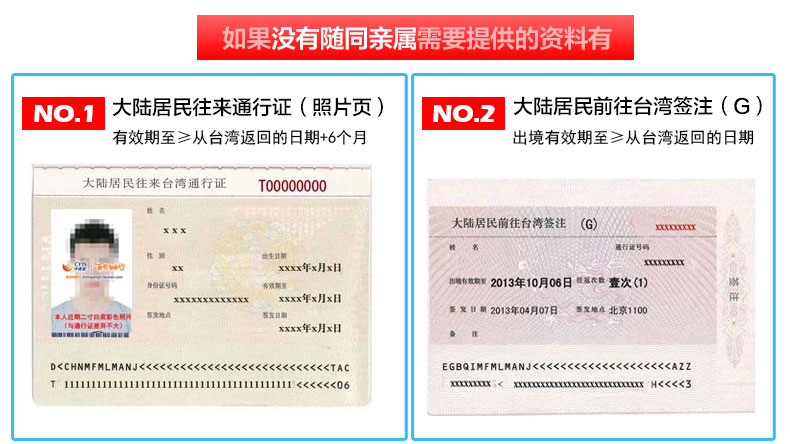
For the entry permit, I’d recommend checking on Taobao two months ahead to see what conditions are required. The sticking points are usually proof of assets and proof of an emergency contact. For proof of assets, you generally need a deposit statement, an income certificate, or a gold-card credit certificate. If you go the deposit-statement route, you’ll need to set up a time deposit at least a month in advance, held for three months. If your emergency contact isn’t listed on the same household register, you’ll need to go to the police bureau to obtain a proof of relationship.
Finally, for the entry permit itself, it’s best to start the process about three weeks ahead so you can choose the cheapest option on Taobao.
Accommodation
I booked almost everything on Booking. Looking back now, Booking is slightly more expensive, so I’d suggest comparing several booking sites, such as Alitrip, Ctrip, Zizaike, Dayu, and Airbnb. I stayed in Taiwan for nearly 10 days and felt the hotels there were all really good. The gaps between hotels aren’t as large as on the mainland—whether a big hotel or a small guesthouse, they were all clean, and the staff’s service attitude was especially good, with none of the discrimination against mainlanders that’s claimed online. So when choosing a hotel, I’d suggest just focusing on two things: price and location. If you’re self-driving, also check whether there’s parking.
Good things about using Booking:
- The hotel selection is very complete—it has the broadest coverage.
- The reviews are very helpful. Once you’ve picked a hotel, check the reviews for any deal-breakers.
Things to watch out for with Booking:
- Many hotels don’t accept cancellations, so be careful about cancellation policies. I remember when I booked the Sun Moon Lake hotel, the prepayment was deducted the day after I booked. Even canceling 15 days before check-in still incurred a charge, so in the end, left with no choice, I just had to stay one more night and cancel the hotels that could still be canceled. But many hotels do accept cancellations due to typhoons, so when you run into a typhoon, you can call the hotel to reschedule.
- When many hotels display rooms, they show the price without tax, but at actual check-in you often face a 15% tax. So remember to check the confirmation email Booking sends and verify the real booking price.
Communication and Internet
- I’d recommend buying a SIM card with data and a portable Wi-Fi device online.
Why buy a SIM card? Mainly for convenience—calling Uber, renting cars, registering ride-hailing apps, or making emergency calls. On Taobao, the 100-yuan card with 10 days of unlimited data plus 50 NT dollars, and the 50-yuan card, are both good options. One complaint, though: Taiwan’s prepaid call rates are far too expensive at 6 yuan a minute, whereas dialing directly with a domestic phone costs only about 1 yuan a minute. So my suggestion is to use the Taiwan SIM card just to receive calls, since Taiwan’s 4G signal is excellent. For several work calls, I later had the other party switch to DingTalk internet calls, and it worked quite well. - The data card and the call card in your portable Wi-Fi are best from different providers, because in a given place the call card may have a great signal while the data card’s is poor, or vice versa.
- Taipei Airport has free Wi-Fi, and you can also buy a card right at the airport. From a quick look, the price is just a little higher than on Taobao.
Getting Around
Flights: the earlier you book, the cheaper. Nowadays flight prices are basically on the same level across the major sites, with no big discounts. Alitrip occasionally runs promotions, but those promo products are often dated for weekdays, which don’t suit travel.
Taiwan High Speed Rail: also cheaper the earlier you book. Book a month ahead and you can get tickets at 30% off. However, if you book HSR tickets and refund early, there’s a 5% handling fee.
Taiwan Railways: many people recommend taking Taiwan Railways for the scenic ride along the way. However, Taiwan Railways requires a Taiwan ID to book, though this can be handled via Taobao (Taobao really is all-powerful).
Self-Driving
For the last point on getting around, I personally strongly recommend a self-driving loop around the island. If you’re under more financial pressure, you can drive for a few days in Kenting and use public transport or rent a scooter (motorcycle) elsewhere. Self-driving is far more relaxing—especially when waiting for transport or out at night, you won’t feel anxious. And if you drive yourself, the places you can reach far exceed the range you’d cover renting a scooter (motorcycle).
If you choose public transport, you’ll need to do more planning. Your hotel needs to be somewhere with convenient transit, and you’ll have to figure out in advance where to catch long-distance buses or trains. That said, long-distance buses and trains are actually fairly convenient, and it’s very easy to look up how to get around. I recommend a website—http://guide.youtx.com/ —where you enter your current location and destination, and it tells you exactly how to get there and which transport to take.
Car Rental
- First, get a Hong Kong local driver’s license via Taobao. Taiwan is a member of the international IDP, but mainland China is not, so Taiwan doesn’t recognize a mainland Chinese license, whereas Hong Kong is an IDP member. But a Hong Kong IDP license requires a Hong Kong local ID to obtain. That said, as more and more Hong Kong people rent cars in Taiwan, most Taiwanese rental companies now recognize Hong Kong local licenses. I recommend https://shop108152449.taobao.com/?spm=2013.1.1000126.d21.o0lno6 —the owner’s service attitude really is good (a free shout-out for them). Note that getting a Hong Kong local license takes two weeks, so travelers should leave plenty of time.
- Taiwan’s rental companies have many rental apps, such as Avis, RentalCars, and Dayu. Compare prices and pick the cheaper one.
Car Rental Tips
- When placing an order on RentalCars, you’ll be prompted to buy all-inclusive insurance for 100 yuan a day. You can actually skip it, since the rental company will have purchased some insurance.
- Some rental companies can provide free child safety seats and navigation devices, such as Chailease Car Rental, which I chose this time.
- Be especially careful: eating or bringing pets in the rental car isn’t allowed, or you’ll be fined 3,000 NT dollars. Earlier, my kid was eating crackers in the car and left some crumbs, and the rental company demanded a 3,000 NT cleaning fee. I argued that the car had broken down and delayed half a day of our itinerary, and in the end the cleaning fee was waived.
- Remember to bring your own in-car USB charger; Taiwan rentals don’t provide one (US rentals do provide an in-car USB charger). I strongly recommend bringing your own in-car radio too, because Taiwanese radio stations have way too many ads—it’s annoying to listen to.
- When a car has a problem, you can ask the rental company to swap it. Normally, though, if the car hasn’t had any issues, swapping cars incurs a fee.
- Taiwanese rental companies generally have a good service attitude. Remember that when returning the car at the end, you’ll be charged 500 in highway tolls. However, because there was a fair amount of fuel left in the car—about 700 yuan worth—it directly offset the toll fee. A complaint here about the US company Thrifty: when I ordered online it was full-to-full, but when it came time to rent it became empty-to-empty, tricking me into handing them a free tank of gas.
Navigation Apps
I tried Amap, Baidu, and Google. In the end I found Amap and Baidu unusable, and could only choose Google. But compared with Amap, Google navigation is far worse—it frequently gives false alerts, and you’ll be driving along when it suddenly changes the route and tells you to turn around. It’s downright infuriating.
Taxis
- Taxis in Taiwan are very expensive—70 NT to start, and you’ll hit 200 NT after just a short ride, about 1.4 times the price of Uber.
- Uber still works in Taiwan; it’s just that when locating you, it often can’t pinpoint accurately, so you need to manually adjust your position on Google Maps.
- When I got off at Taipei Airport and was looking for the airport bus, I ran into a few men in dress shirts at the airport bus ticket counter and asked how to get to the hotel. They told me to take a bus to a certain place and then a taxi to the hotel, saying it would cost me about 500 NT, and that it’d be better to take a taxi out front for 800 NT. Later, checking Google, I found there was a direct long-distance bus. Looking at these people again, they were clearly touts dressed up like staff, specifically targeting mainland tourists. That said, an actual taxi really would cost over 800 NT.
Shopping
Unfortunately, I didn’t do much shopping in Taipei this time, so I can’t give travelers great advice. I just bought some cosmetics in the basement of Taipei 101.
Since I was in Taipei around October 2, I happened to catch Taipei 101’s anniversary, with many cosmetics (all local Taiwanese brands, though) on sale—genuinely much cheaper than on the mainland.
There’s an Apple store below Taipei 101. By my calculation, an iPad mini that costs 3,688 on the mainland was about 3,500 there, and with the tax refund you could save roughly 300. But be careful with iPhones—Telecom 4G won’t work, so research this online in advance.
Taipei does offer tax refunds: as long as you spend over 2,000 NT, you can have a refund form issued and then claim the refund at the airport. The refund rate is about 4%.
Food
The food in Taiwan is really good and worth praising. I reckon it’s because the Chinese are simply a people who love to eat well.
- There are lots of snacks at the night markets, worth trying. That said, many night-market snacks lean sweet, so travelers who don’t like sweet things will probably be a bit disappointed.
- There’s a Din Tai Fung below Taipei 101, worth recommending.
- I once ate at Xinyi Plaza in Taipei—not bad.
- On Kenting Main Street, snacks line the whole way, but finding a decent restaurant is genuinely hard.
- In Kenting you can have seafood, though seafood prices aren’t exactly cheap.
- I had a set meal at Songhe Lou at Sun Moon Lake. The recommended dish, the President Fish, was very mediocre—not as good as the fish made by the other place across from it.
Mishaps
- In Taiwan, typhoons are all too common, so when one hits, you may be stuck in the hotel for a day or even several. The only thing you can do is check for typhoons before your trip and try your best to avoid them. Since flights are often booked a month ahead, the timing basically can’t be changed; but you can adjust the itinerary to try to avoid the center of the typhoon.
- If you get injured or have an accident, it can actually be reimbursed if you bought insurance—you just need a medical visit record and an official invoice.